2025 AIChE Annual Meeting
(374h) Multifunctional Nanogels Combatting Drug-Resistant Bacterial Infections and Regulating Bacterial Antigen-Induced Hyper-Inflammation
Author
Sudip Mukherjee - Presenter, Rice University
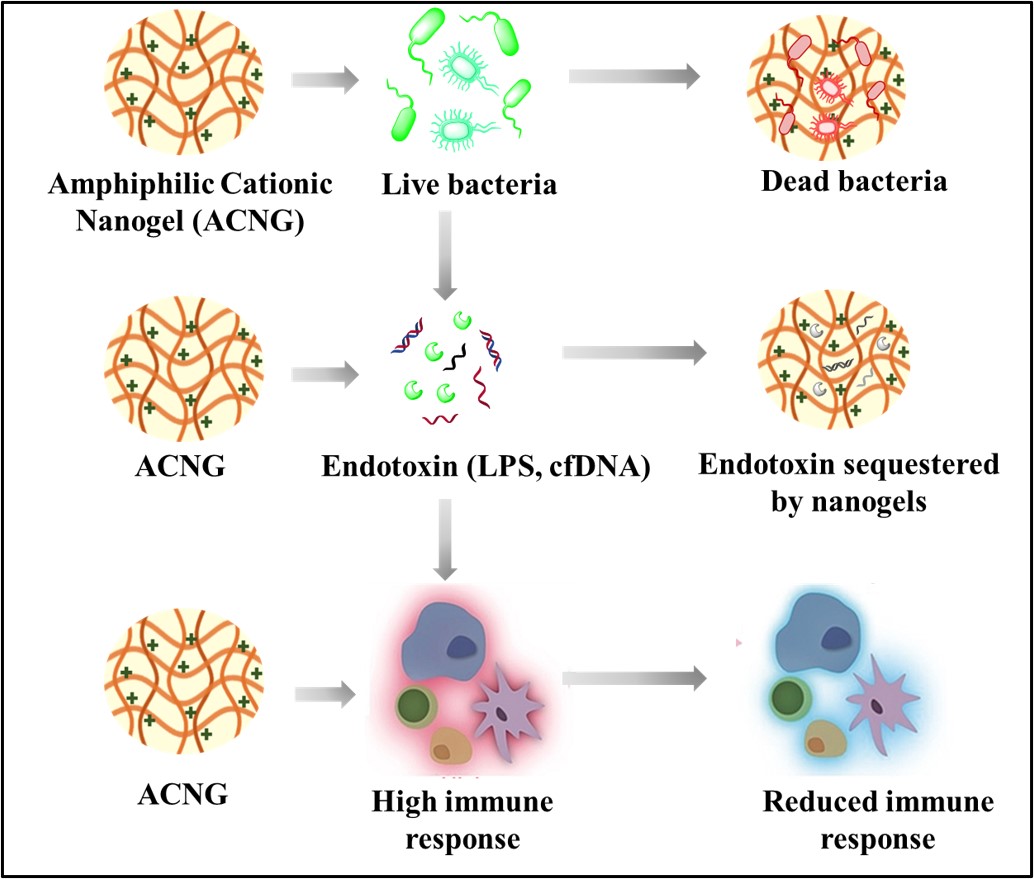
The alarming surge of antimicrobial resistance (AMR) in Gram-negative superbugs, coupled with their formidable biofilm forming ability has left clinicians with almost no treatment options. Such notorious infections are frequently associated with sepsis, a systemic inflammatory response triggered bycommonly referred to as 'cytokine storm or sepsis', with high morbidity worldwide. To confront and resolve these challenges, we report the engineering of multifunctional amphiphilic cationic nanogels (ACNGs) to treat drug resistant Gram-negative infections and diminish associated hyperinflammation. Due to high cationic charge and porous nature, these nanogels can efficiently scavenge bacterial antigens like LPS, resulting in significant reduction (55-70%) in the expression of various pro-inflammatory cytokines such as TNF-a, IL-6 and IL-8. The optimised nanogel, due to its multifaceted mechanism of action, rapidly kills wide range of Gram-negative superbugs with >5 log reduction in the bacterial burden within 6h. In addition, it is able to eliminate difficult-to-treat stationary phase bacteria and disrupt bacterial biofilms, unlike conventional antibiotics. More importantly, these nanogels demonstrated excellent in-vivo biocompatibility, when tested through different routes of administration (LD50 (intraperitoneal = 98 mg/kg), (subcutaneous >175 mg/kg) and (dermal >200 mg/kg)) and also reduced bacterial count (A. baumannii) by ~99% in burn-wound infection model, while mitigating the inflammatory response at the infected tissue. To the best of our knowledge, there are no reports of nanogels exhibiting such dual-pronged ability to counter drug-resistant infections, disrupt bacterial biofilms, and regulate the associated cytokine storm. Hence, this inherently antibacterial and LPS-scavenging dual functional nanogel formulation, devoid of any antibiotics or any anti-inflammatory drug, bear immense potential to be developed as a therapeutic biomaterial to treat drug-resistant microbial infections and simultaneously reduce chronic inflammation.