2025 AIChE Annual Meeting
(579b) Innovative Commercial and Technological Solutions to Upgrade Flare Gas to Low Emissions Fuels
Authors
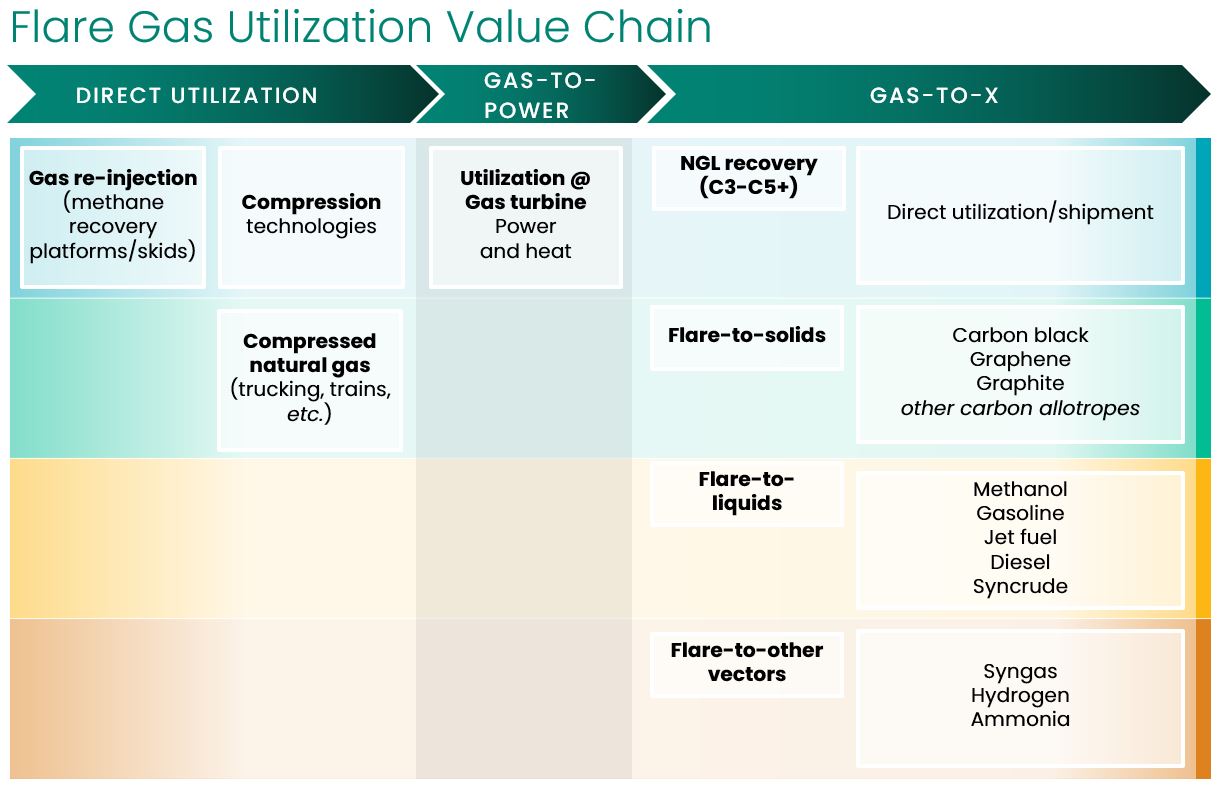
A number of the available technologies in reducing flare catering to a number of segments (size, geographical constraints, utility requirements, end-product, etc.) include the following:
- Flare-to-Power: capturing methane to generate captive or grid power
- Flare-to-Pipeline: compressing methane and clustering the molecules to a central location for future utilization
- Natural gas liquids (NGL) recovery: extracting liquids and relatively high-value liquefied petroleum gas (LPG) or propane
- Flare-to-X: increasing energy density significantly or chemically converting other end products, including hydrogen, methanol, synthetic fuels, high-value solid products (graphene, carbon black, graphite), , or combinations thereof.
One such example of the Flare-to-X route is through chemical conversion to a valuable end product, such as clean fuels. Numerous benefits include (1) transformation to an increased energy density, (2) upgrading to liquids that are easier to handle via pipeline, trucking, and eventual other modes of transport, e.g., shipping, and (3) enabling opportunities to play in the low carbon market space. However, there is a technological and commercial gap for these solutions due to the unavailability of existing solutions due to location, supply-demand connection, market considerations, and other factors. Engineering integration, tech economic analysis, commercial viability, and other constraints, such as qualification to a suite of present and future regulatory frameworks, are all poorly understood.
In this presentation, we will highlight the various solutions to convert flare gas to clean fuels that suit various geographical constraints, availability of utilities, and other restrictions in a typical upstream oil and gas infrastructure. A plethora of engineering strategies are highlighted, such as modularization, integration opportunities, and optimization of the specific yield molecules (syncrude, methanol, diesel, gasoline, jet fuels/kerosene, etc.), exploring the most optimal and commercially viable solutions for various configurations.
In this work, we will also showcase the calculated emissions intensity of the fuels produced with the use of waste flare gases and compared the carbon intensity calculations with methodologies under multiple regulatory frameworks that include but are not limited to California Low Carbon Fuel Standard (LCFS) and Carbon Offsetting and Reduction Scheme for International Aviation (CORSIA). Finally, a review of potential pathways to access incentives, capitalize on regulatory frameworks (voluntary and compliance) on carbon markets, and specific end-to-end applications (e.g., flare-to-power for data centers, flare-to-sustainable aviation fuels, flare-to-wheel, etc.) are assessed and explored. The paper also focuses on comparing lifecycle costs between low carbon fuels (LCFs) and sustainable aviation fuels (SAF), flare-to-liquids and e-fuels based on publicly available data.
This holistic understanding of technology, commercial pursuits, and regulatory frameworks will drive disruptive commercial models and partnerships, leading to the development of meaningful and actionable roadmaps towards meeting emissions reduction targets and achieving a net zero future. Flare-to-liquid is a low-hanging fruit in many decarbonization pathways for the transportation industry. As will be highlighted holistically in this presentation, this technology platform has the potential to become the bridging fuel between SAFs and e-fuels by bringing a cost-competitive low-carbon and circular fuel to transportation, mining and other hard-to-abate industries that depend on liquid fuels without major disruption to their existing infrastructure.