2025 AIChE Annual Meeting
(415d) Growth Morphodynamics of Physarum Polycephalum Under Confinement
Authors
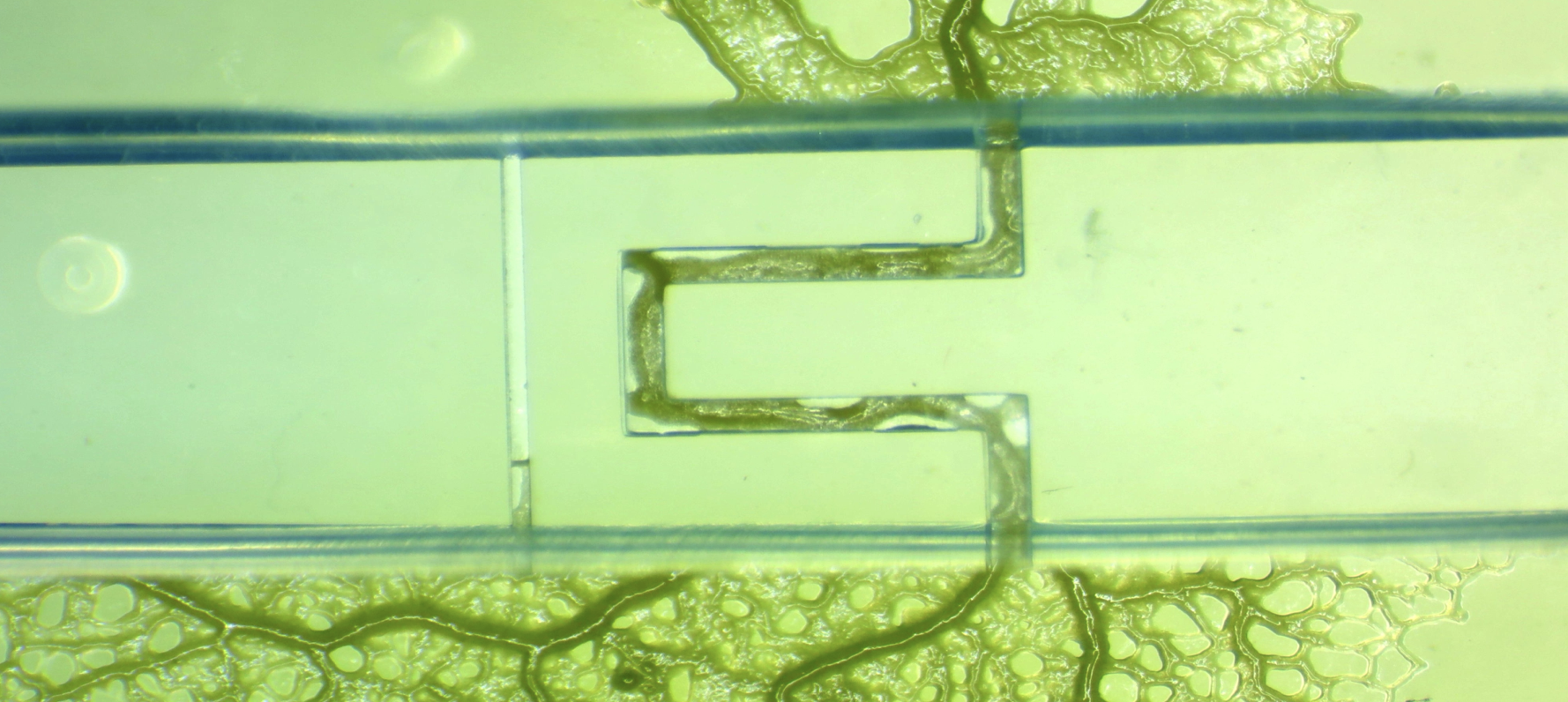
We find that Physarum does not select the shortest path between food sources. Instead, it reliably prefers channels with lower hydraulic resistance, even when they are longer. In highly confined channels, Physarum exhibits intermittent “Run and Tumble” motion, while in wider, less resistive channels, it transitions to smooth, uninterrupted growth. These behavioral regimes are tightly coupled to the balance between channel geometry and flow resistance.
By quantifying growth rates and occupancy patterns across a range of microchannel designs, we establish that Physarum’s decision-making is dictated by fluid mechanical principles rather than purely chemical cues or path length. This work provides a biophysical framework for understanding spatial decision-making in confined environments and may inform the design of bioinspired algorithms and adaptive transport systems.