2025 AIChE Annual Meeting
(285c) Electrospun PANI Nanofiber Composites for Electromagnetic Interference Shielding
Authors
Colton Duprey, Materials Engineering And Nanosensor (MEAN) Laboratory, Department of Chemical and Biological Engineering, The University of Alabama
Evan Wujcik, The University of Alabama
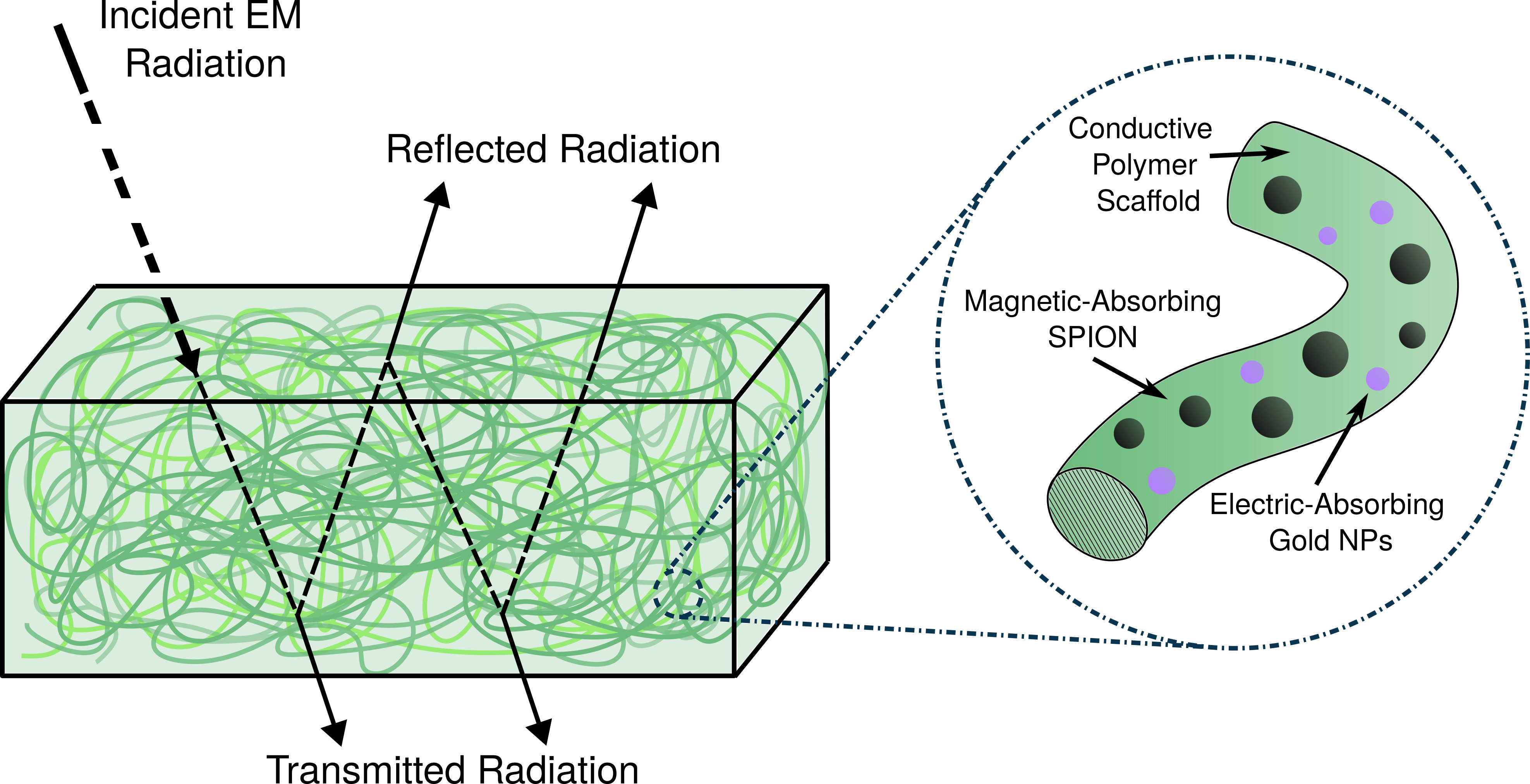
As dependence on wireless communications (WiFi, cell towers, radio, etc.) continuously increases, excess radiation may interfere with the normal operation of electronic devices. Electromagnetic interference (EMI) shields isolate sensitive electronics from unwanted radiation through the reflection or absorption of electromagnetic waves. Traditionally, metallic shields are used; however, these are dense, expensive, inflexible, and block radiation through reflections, leading to secondary interference. Significant research efforts have been made in recent years to develop lightweight and flexible EMI shields using composite materials focusing on radiation absorption. One approach is electrospinning, a technique that forms non-woven textiles by accelerating jets of polymeric solutions under an electric field. The resulting shields exhibit a high surface area, improving electromagnetic wave absorption, while their fibrous structure promotes lightweight and flexible properties. This work investigates the development of electrospun conductive polymers incorporating gold and superparamagnetic iron-oxide nanoparticles to enhance EMI shielding effectiveness in the GHz frequency range. This work will describe the theory methodologies employed to design effective EMI shields, current shielding effectiveness, as well as future directions of research.