2025 AIChE Annual Meeting
(631b) Efficient Waste-to-Value Conversion: Synthesizing Carbon Microspheres from Brewers’ Spent Grain Via HTC
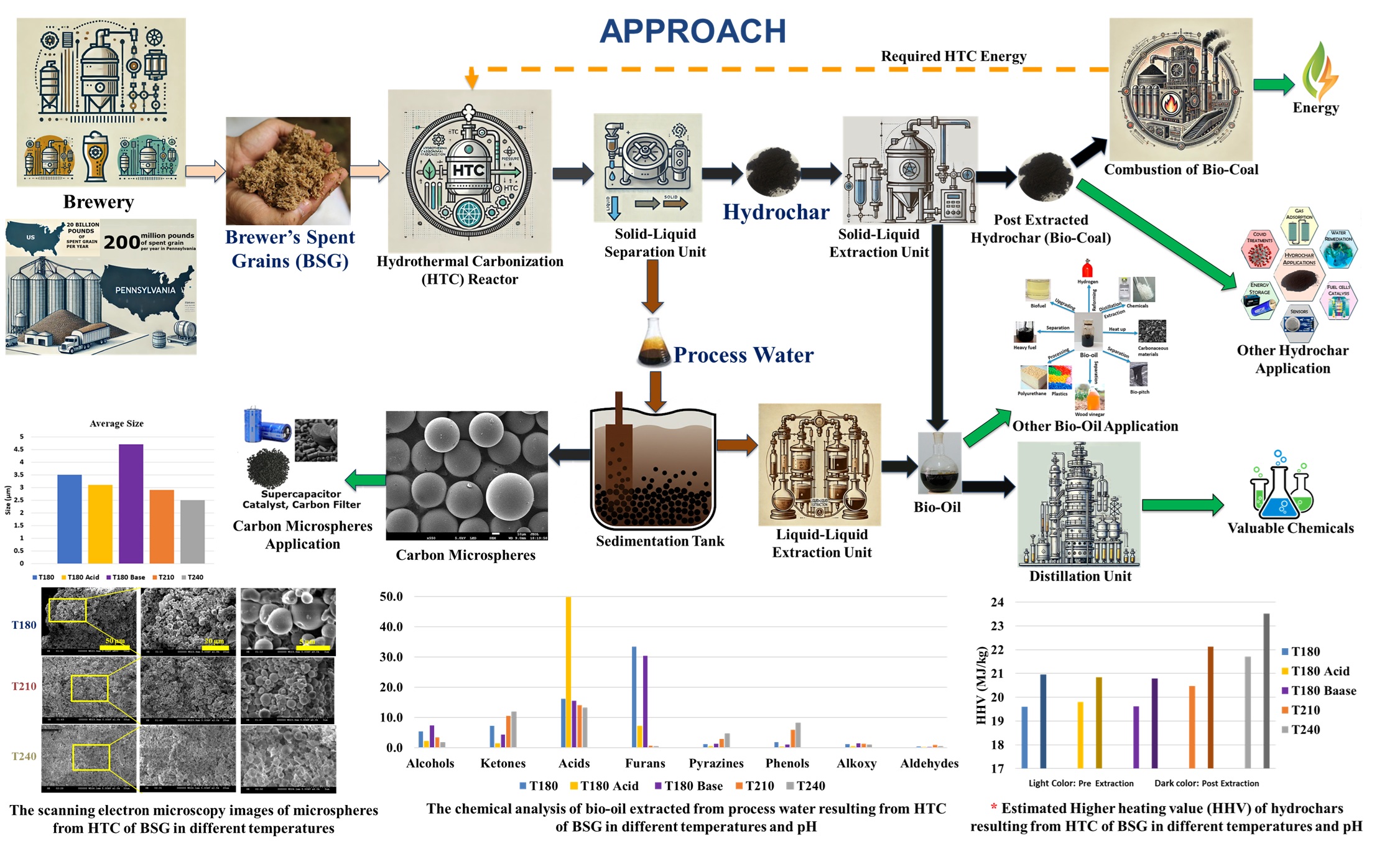
Experimental investigations reveal that reaction conditions—specifically elevated temperatures (180–240°C) and lower pH levels—facilitate rapid and uniform microsphere formation, as confirmed by dynamic light scattering and scanning electron microscopy analyses. Conversely, lower temperatures yield a broader size distribution of microspheres, underscoring the critical influence of process parameters on product quality.
In collaboration with industry partner SoMax Circular Solutions, ongoing efforts are focused on optimizing the synthesis rate, functional properties, and purity of the microspheres. This research not only advances our understanding of HTC process water utilization but also contributes to the circular bioeconomy by transforming a challenging waste product into high-value materials. The outcomes of this study hold significant implications for sustainable waste management and the development of renewable energy solutions within chemical engineering.