2025 AIChE Annual Meeting
(285a) Composite Nanofibers for Integrated Functions (if-Cloth) in Personal Heating and Clean Water Collection
Author
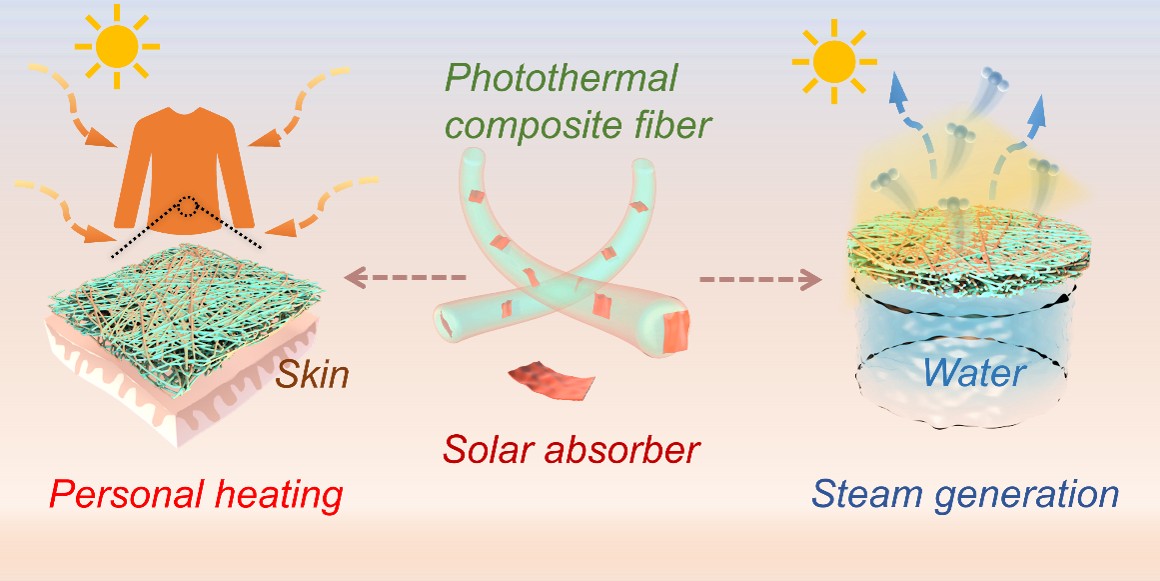
Given the abundance of solar energy on our planet, advanced composite nanofibers capable of integrating personal thermal management and clean water production in an energy-efficient manner represent a promising area of research. In this study, photothermally active, biodegradable titanium carbide MXene/cellulose composite nanofibers were fabricated via electrospinning method and were favorably equipped with desirable chemical stability, mechanical performance, structural flexibility, and wettability. Specifically, a 0.1-mm-thick composite nanofiber produced a 5.6 °C-enhancement on the human body in comparison to that of a commercial cotton cloth of 5 times thicker in the same sunlight at an ambient temperature of 11.2°C. Notably, the composite nanofibers demonstrated enhanced photothermal conversion efficiency in a wet state, achieving a conversion efficiency of 87.7%. Correspondingly, such wet nanofibers served as a high-performance steam generator with a superior water evaporation rate of 1.34 kg m-2 h-1 under one sun irradiation (1000 W m-2), and meanwhile remains its performance fitting into solar desalination. These nanofibers with integrated functions enrich a diverse scope of outdoor applications, e.g. in solar-driven water evaporation and personal heating.