2025 AIChE Annual Meeting
(656a) From Waste to Worth: Transforming Ecuadorian Biomass into Sustainable Solutions through Modified Hydrothermal Carbonization and Bioproducts Extraction Processes
Authors
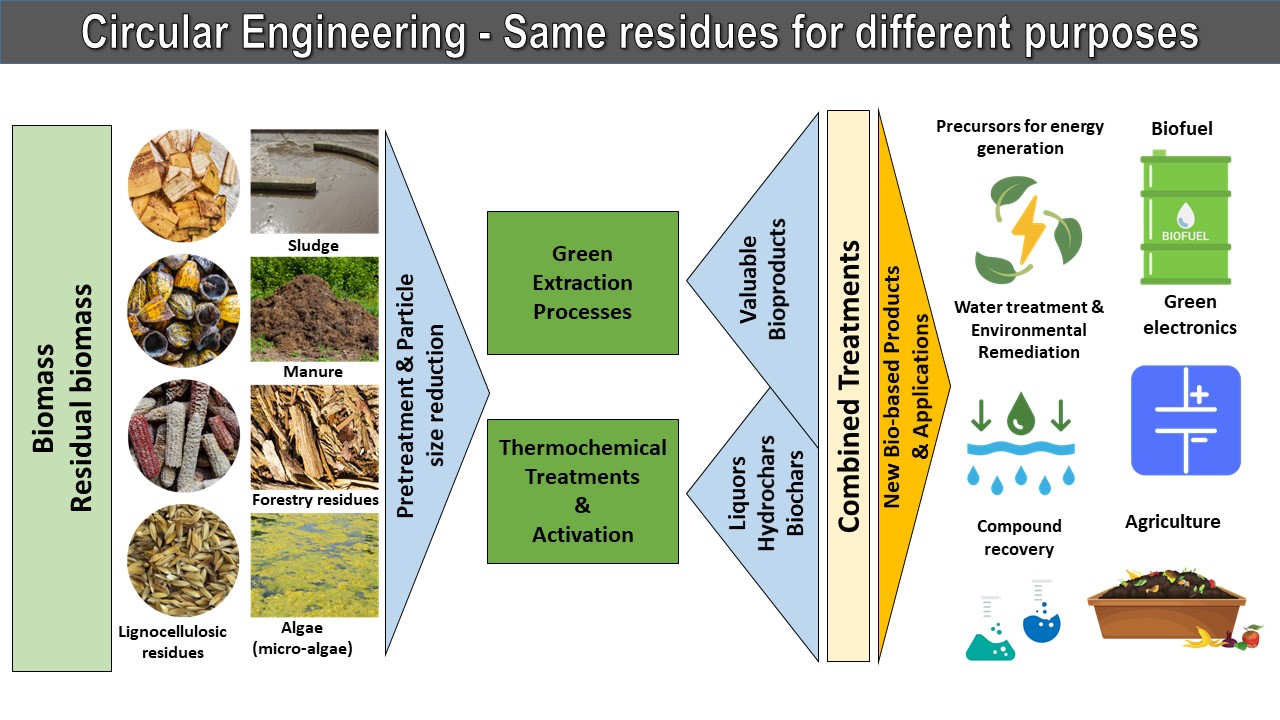
The characterization protocol incorporates FTIR analysis, GC Chromatography, SEM, quantification of major and minor elements utilizing ICP-OES, and, where electrical properties are of interest, semiconductor analyzers or multimeters for evaluation purposes. Investigations regarding agricultural applications, including fertilizers and environmentally benign pesticides, are being conducted and evaluated, alongside the pursuit of novel semiconductive HTC-based materials with feasible applications such as capacitors, insulators, and conductive inks. Additionally, innovation in bioproducts extraction processes and modification of native and HTC materials is being expanded through the implementation of novel environmentally responsible methodologies.
Results have demonstrated that certain biomasses exhibit promising characteristics in the remediation of emerging contaminants (even in their unprocessed state), electrical applications, agricultural utilizations, and other potential sectors. Some biomasses, particularly those derived from exotic fruits, have demonstrated efficacy in multiple application domains. Future research endeavors will include the construction of prototype devices and formulations based on the most promising HTC materials to assess their viability in real-world operational scenarios.
In conclusion, modifications of native and HTC biomass materials can serve as reliable and efficacious alternatives to conventional materials across a broad spectrum of industries, thereby facilitating the transition toward an environmentally sustainable circular economic model.