2025 AIChE Annual Meeting
(61e) Using Stories from Traditional Culture to Teach Virtue-Based Engineering Ethics
Authors
Jiamin Zhang - Presenter, University of California, Santa Barbara
Oceana Alessandro, University of California, Riverside
Tyler Jann, University of California, Riverside
Olivia Kramer, University of California, Riverside
Meera Vasishta, University of California, Riverside
Olivier Truong, University of California, Riverside
Neha Gutlapalli, University of California, Riverside
Hsin-Ling Hsieh, Northern Michigan University
Dena Plemmons, University of California, Riverside
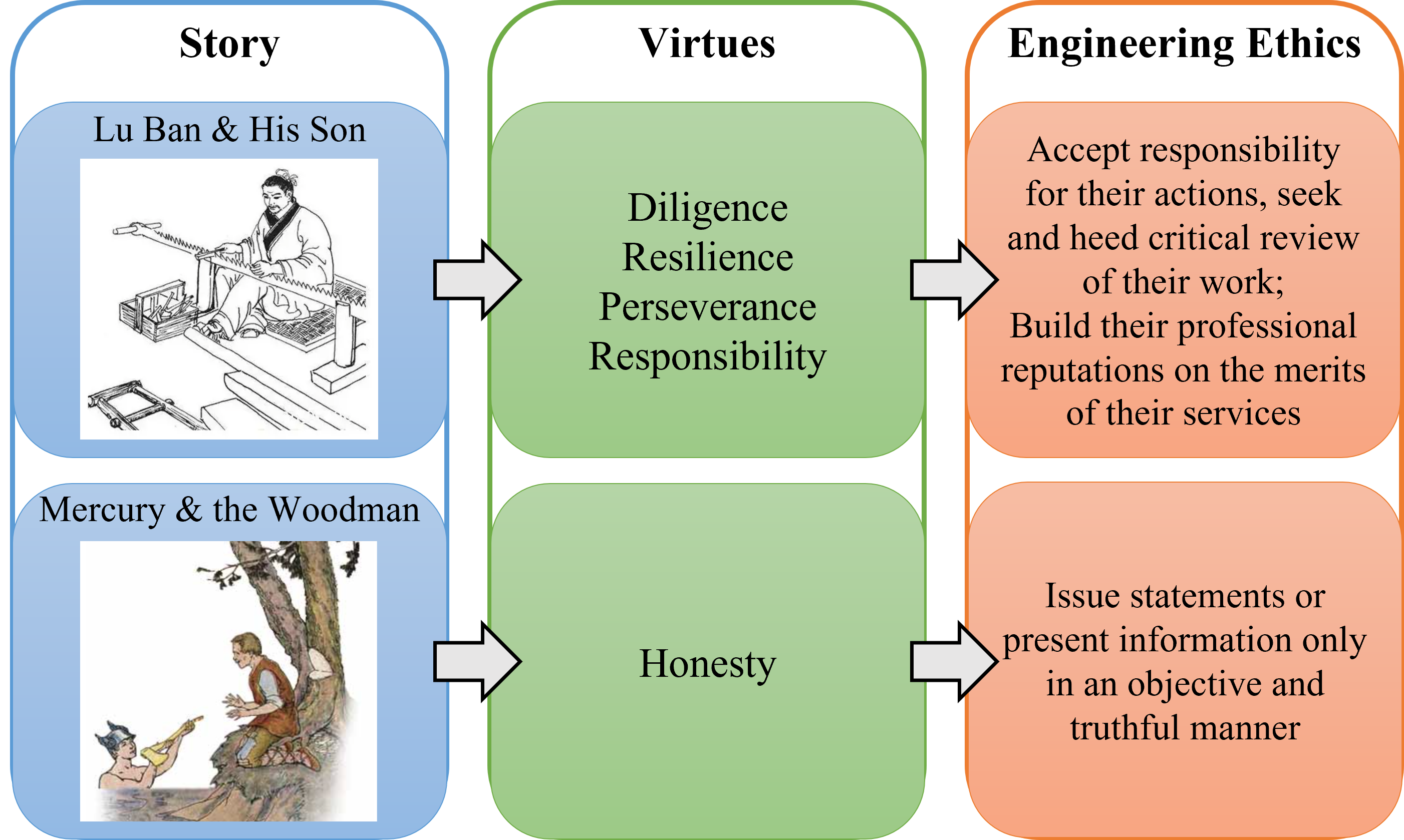
Engineers play a pivotal role in society. Therefore, it is critical to train engineering students to be ethical engineers. Most of the engineering ethics training offered currently focuses on technical ethics, not focusing on the development of the whole person. Furthermore, oftentimes, students show a lack of interest in engineering ethics training and case studies often lack context. Prior research has shown that virtue-based character education offers a viable approach for more holistic engineering ethics training. A character approach to engineering ethics offers personal motivation and actionable dimensions to ethical reasoning. However, within the field of engineering ethics, currently only limited studies have been done on virtue-based character education in undergraduate engineering courses. In this study, we develop stories from traditional culture of different countries into teaching modules to help engineering students identify virtues present in the stories, make connections to engineering ethics, and improve ethical decision-making. The teaching modules include short virtue-of-the-week stories at the beginning of class, team-based class activities, and case studies. We integrate the teaching of ethics with students’ coursework so they can practice ethical decision-making when solving problems and when working on a team in class. Preliminary findings from the pilot study in a capstone design course at a large public university in the US show that most students think the stories from traditional culture help them better understand virtues and act as an ethical engineer. Additionally, results from course surveys suggest that students are engaged and interested in our approach. A qualitative analysis of students’ written responses also suggest that the stories help students with ethical decision-making. Our study will advance knowledge in the field of engineering ethics by investigating how stories from traditional culture help students understand engineering ethics and inform students’ ethical decision-making. The teaching modules developed in this study will also be useful resources for other engineering faculty who are interested in incorporating engineering ethics in their courses.