2025 AIChE Annual Meeting
(447a) Triptycene-Based Microporous Polyimine Membranes for Efficient Separation of Liquid Hydrocarbon Mixtures
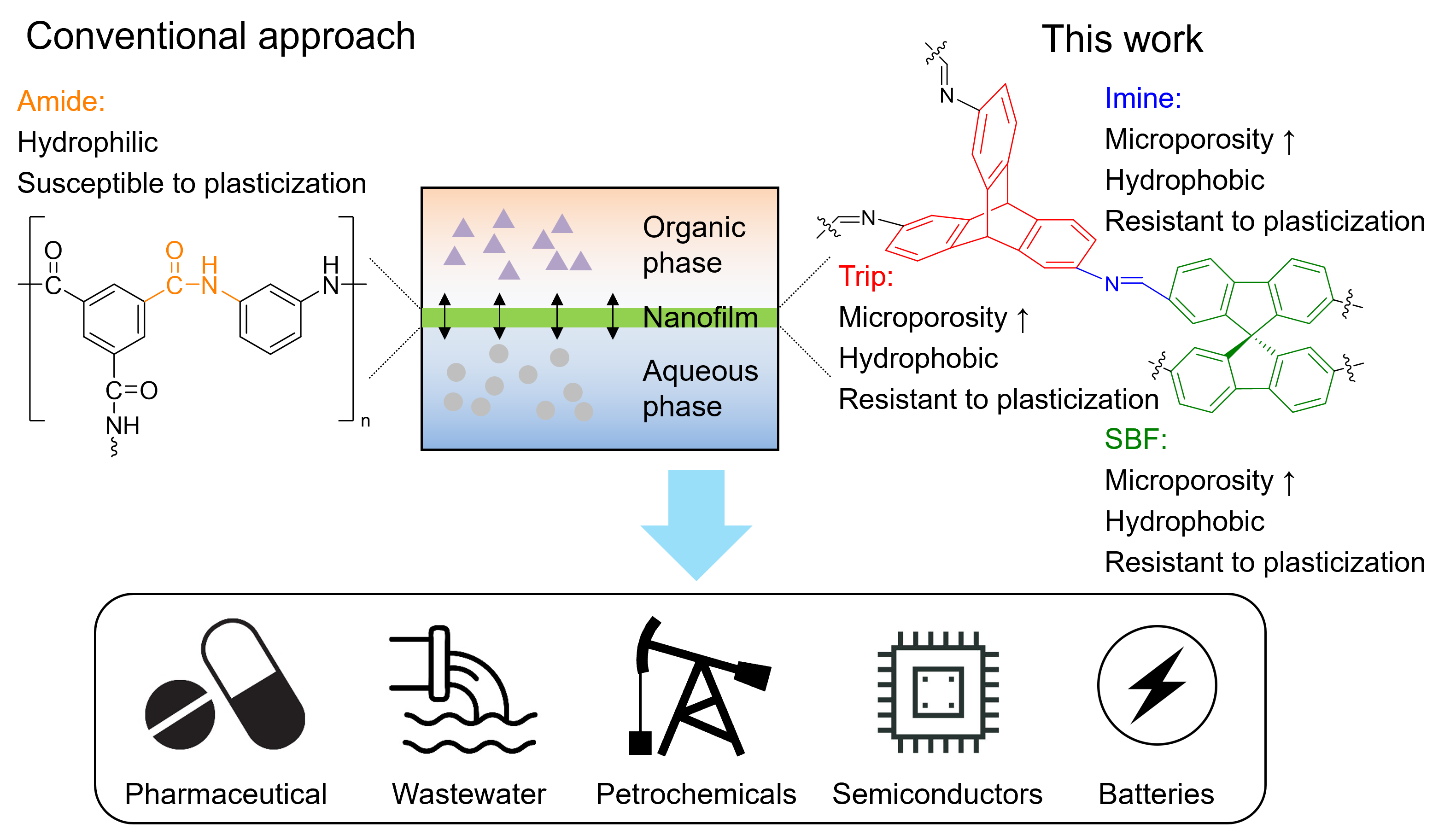
However, our group recently found that a classical, fully aromatic polyamide thin-film composite (TFC) membrane showed almost no separation ability of hydrocarbon mixtures as well as extremely low permeance for this application (Sci. Adv. 10, adp6666 (2024)). This observation highlights that the most selective RO membrane material currently available for water/salt separation may not be suitable for the separation of nonpolar hydrocarbon mixtures, perhaps due to the hydrophilic nature of amide linkages and insufficient swelling/plasticization resistance of the conventional polyamides. Although incorporating fluorine groups is a common approach to preparing hydrophobic polyamide TFC membranes for hydrocarbon separations, growing environmental concerns may limit their long-term commercial viability.
To overcome the current limits of polymeric membranes for organic solvent separations, we herein report a molecular engineering approach based on acid-catalyzed interfacial polymerization for efficient hydrocarbon separation. The design strategies include (1) alternating the linkage from amide to imine and (2) subsequent introduction of a shape-persistent triptycene unit. Our results highlight that introducing a new imine linkage and micropore-generating units is a useful strategy to develop size-selective, plasticization-resistant, and fluorine-free OSRO membranes by interfacial polymerization for crude oil fractionation. One of the key findings includes that the developed polyimine TFC membranes maintain their structural rigidity (i.e., glassy nature) in the swollen state, suggesting that they can access molecular-sieving ability during operation. This feature has not been observed in other polymeric OSRO membranes. Ultimately, permeation tests with multicomponent and realistic mixtures demonstrate that the most optimized membrane was capable of highly efficient fractionation of hydrocarbon molecules by carbon numbers. The developed membranes would be promising as a supplement/alternative to energy-intensive distillation for producing petroleum and bio-based chemicals and fuels.