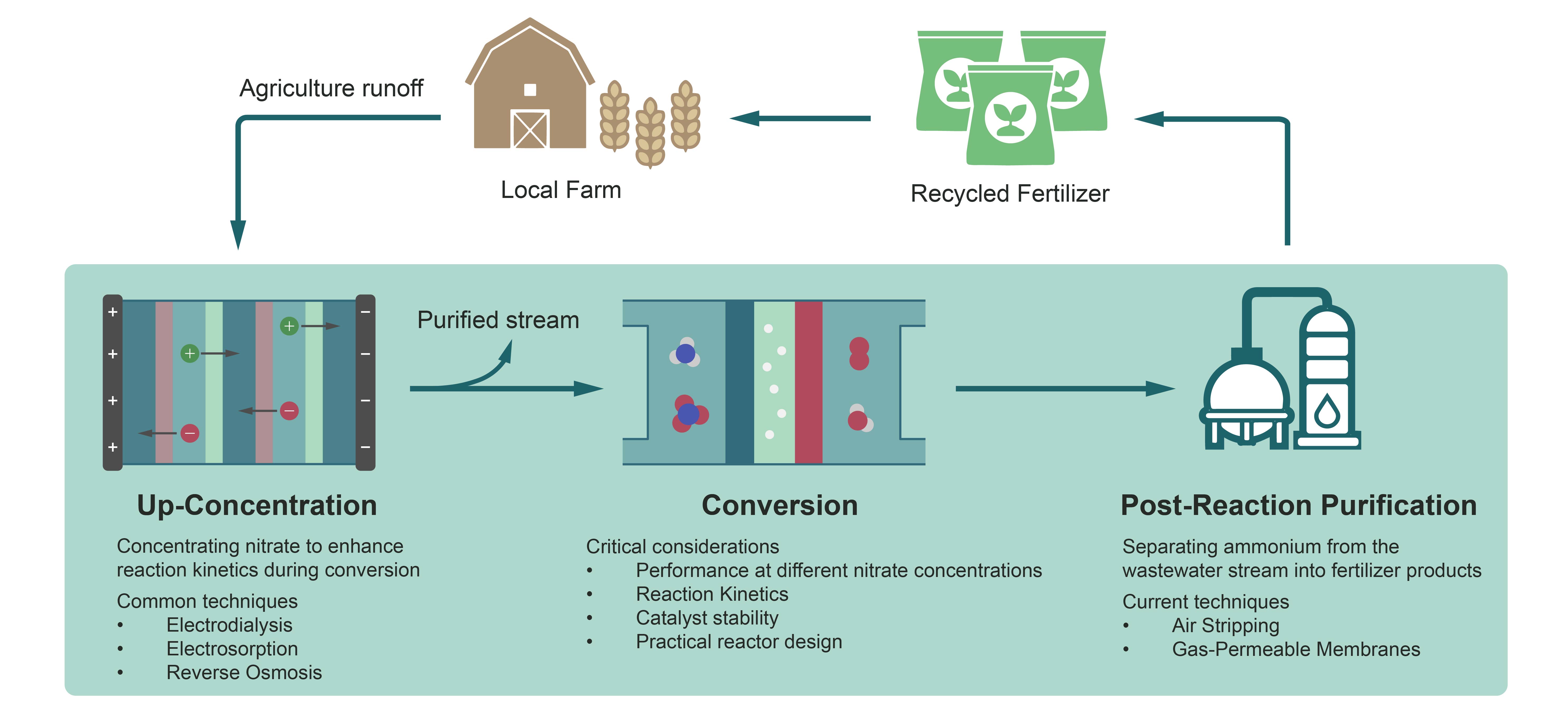
Recent research has shown a surge of interest in the electrochemical nitrate reduction reaction for ammonia synthesis. While catalyst development has advanced rapidly, a significant gap remains in understanding the complete system required to recover NH
3 from wastewater nitrate for real-world applications. Additionally, there is no consensus on the practical reaction conditions that should be used to assess the fundamental catalytic performance, including the electrolyte composition and nitrate concentration. In our recent work, we first report a three-chamber solid electrolyte reactor design, and couple this with cation shielding effects for efficient nitrate reduction reaction without supporting electrolytes. By flowing treated nitrate-containing water from the cathode chamber to the middle solid electrolyte layer, we can realize a cation shuttling from the middle layer back into the cathode chamber to boost the nitrate reduction selectivity. This reactor system can deliver high ammonia Faradaic efficiencies at practical current densities under a typical industrial wastewater nitrate concentration, enabling a high-purity water effluent with no need for any electrolyte recovery processes.
In addition to the reactor design, our perspective and analysis also highlight the need for a comprehensive understanding of the entire resource recovery process at a system level—from upstream pre-concentration through conversion to downstream purification. We discuss the challenges inherent in each of these steps, identifying critical areas that necessitate further study to bridge the gap between fundamental research and practical application. Moreover, we provide a systematic techno-economic analysis to suggest how we can determine the nitrate concentration range required for a cost-effective operational system. These examples suggest that, rather than focusing solely on catalyst performance, future research should also investigate the up-concentration and purification units, as well as the integrated system as a whole, to establish optimal operating parameters. This comprehensive approach will ultimately drive this technology toward real-world applications.