2025 AIChE Annual Meeting
Sterilization of Electrospun Soy Protein Fibers Loaded with Extracellular Vesicles
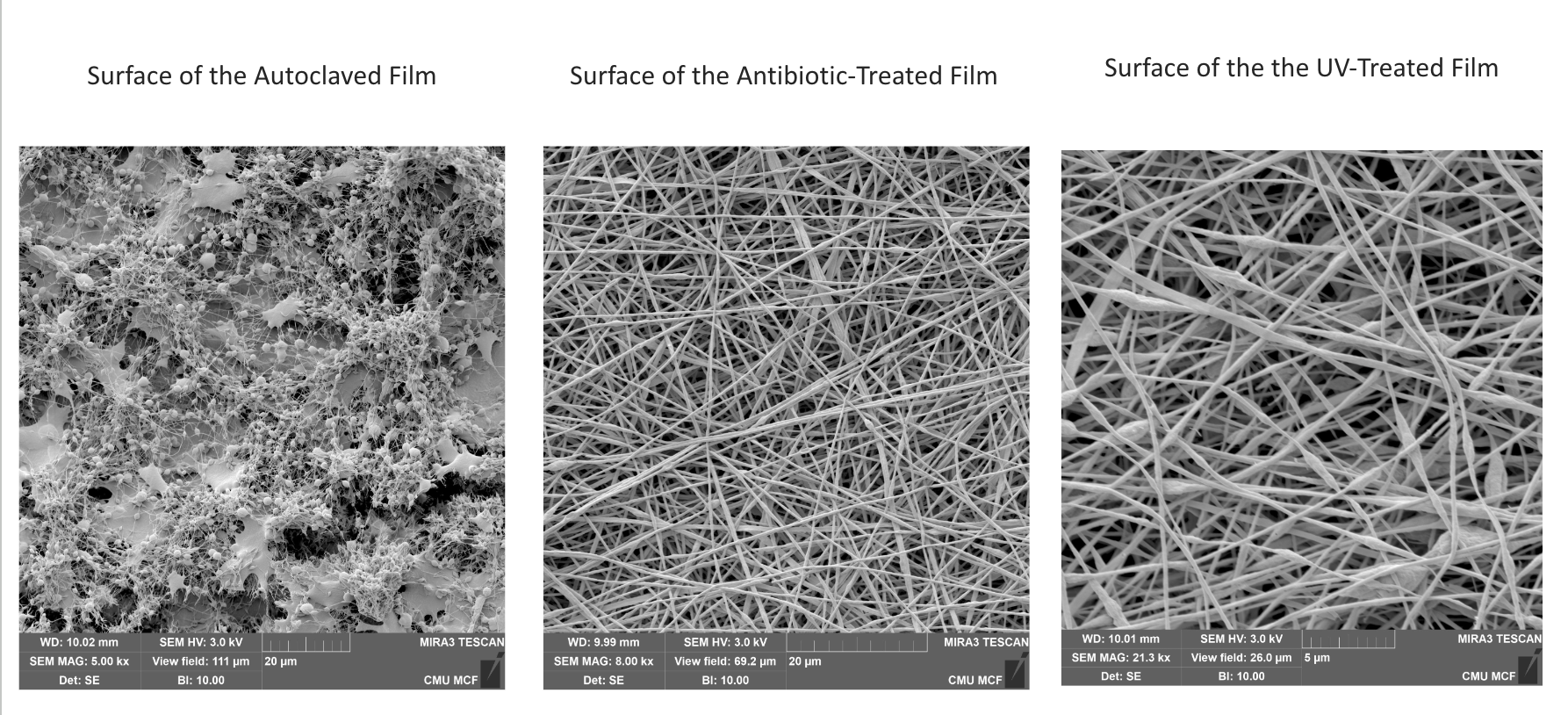
Affordable, sustainable, and effective wound dressings are crucial for abrasion healing. In recent years, there has been a push to explore electrospinning polymer solutions of polyethylene oxide (PEO) and soy protein isolate (SPI) into nano-scale fibers to create wound dressing films. Soy is cost-effective, easily scalable, biodegradable, and provides amino acids for cell metabolism. SPI-based films remain preclinical, and none consider advancing the therapeutic potential of the SPI with the addition of extracellular vesicles (EVs) containing growth factors. The objective of this research was to assess three techniques for sterilizing SPI/PEO fibers fabricated using water as a solvent, while preserving the integrity of the incorporated EVs. The three sterilization methods evaluated were autoclaving the polymer solution before electrospinning, adding antibiotics in the solvent, and sterilizing the SPI and PEO with ultraviolet (UV) light prior to mixing with sterilized water. A scanning electron microscope (SEM) showed successful fiber formation only in the antibiotic and UV sterilization techniques. The films from these techniques underwent a contamination test and no statistically significant difference was found between the film groups and the negative control group. A metabolic assay showed the films increased the overall metabolic activity of C2C12 cells after 2 days. Finally, a fluorescent EV uptake experiment showed EVs remained bioactive after being released from the UV-treated films and antibiotic-treated films. In conclusion, the antibiotic and UV sterilization techniques were successful in fiber formation and EV preservation.