2025 AIChE Annual Meeting
(703a) Socio-Ecological Network Optimization for Integrated Carbon Sequestration and Food Production: The Case of the Philippines
Authors
Heriberto Cabezas - Presenter, University of Miskolc
Kathleen Aviso, De La Salle University
Ferenc Friedler, Széchenyi István University
Angelyn Lao, De La Salle University
Raymond Tan, De La Salle University
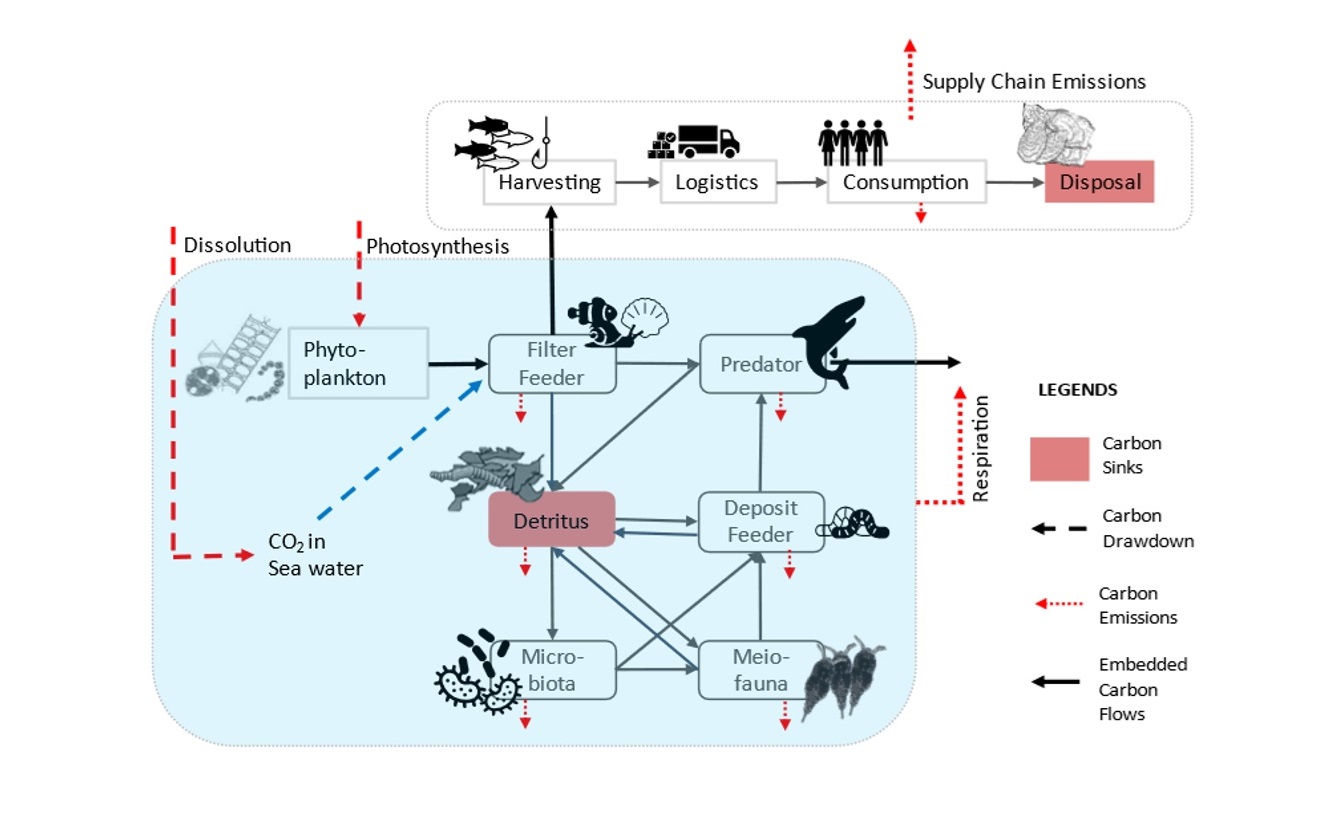
The Philippines, along with many other nation-states, has limited carbon dioxide removal (CDR) options due to unfavorable local conditions. The lack of secure geological CO2 storage sites hinders the deployment of engineered CDR techniques such as direct air capture or bioenergy with carbon capture and storage (1). Long-term trends in land use change suggest that pressure from economic development and population growth make afforestation a doubtful proposition (2). But there is an urgent need for viable climate solutions to shift this and many other developing countries to a carbon-constrained growth trajectory. The Philippine archipelago of over 7,000 islands can use marine CDR to capitalize on its long coastline and rich biodiversity. Nature-based marine CDR in particular, can offer publicly acceptable mitigation options in the immediate future (3). Research and development efforts show evidence for carbon storage permanence, ecological impacts, and co-benefits of marine CDR (4). For example, shellfish aquaculture is reported to be comparable to afforestation in terms of CDR per hectare (5), with calcium carbonate in shells and marine detritus acting as the final carbon sinks. There are also potential co-benefits from the replacement of animal protein from carbon-intensive livestock farming (7) and the use of shells for the production of construction materials (6). Large-scale marine CDR systems can be optimized for benefits with the aid of new ecological engineering techniques adapted from industrial process design methods (8). Hence, we use socio-ecological network models to explore the feasibility of shellfish aquaculture and to anticipate and mitigate any adverse environmental impacts (9). Any lessons drawn from the Philippine case can be used to help ramp up marine CDR in many other developing island-based economies.
References:
- K. Zhang, H.C. Lau, Regional opportunities for CO2 capture and storage in Southeast Asia. Int. J. Greenhouse Gas Control 116, 103628 (2022).
- G.J. Perez, J.C. Comiso, L.V. Aragones, H.C. Merida, P.S. Ong, Reforestation and deforestation in Northern Luzon, Philippines: Critical issues as observed from space. Forests 11, 1071 (2020).
- C. Bertram, C. Merk, Public perceptions of ocean-based carbon dioxide removal: The nature-engineering divide? Front. Clim. 2, 594194 (2020).
- S.C. Doney, W.H. Wolfe, D.C. McKee, J.G. Fuhrman, The science, engineering, and validation of marine carbon dioxide removal and storage. Annu. Rev. Mar. Sci. 17, 55–81 (2025).
- J-C. Feng, L. Sun, J. Yan, Carbon sequestration via shellfish farming: A potential negative emissions technology. Renew. Sust. Energy Rev. 171, 113018 (2023).
- P.W. Boyd, L.T. Bach, C.L. Hurd, E. Paine, J.A. Raven, V. Tamsitt, Potential negative effects of ocean afforestation on offshore ecosystems. Nat. Ecol. Evol. 6, 675–683 (2022).
- E. Van Roijen, S.A. Miller, S.J. Davis, Building materials could store more than 16 billion tonnes of CO2 annually. Science 387, 176–182 (2025).
- F. Friedler, Á. Orosz, J.P. Losada, P-graphs for Process Systems Engineering: Mathematical Models and Algorithms (Springer, 2022).
- A.R. Lao, K.B. Aviso, H. Cabezas, R.R. Tan, Maintaining the productivity of co-culture systems in the face of environmental change. Nat. Sustain. 5, 749–52 (2022).