2025 AIChE Annual Meeting
(661j) Seeing the Invisible: Hidden Electronic Disorder Driving Ion Conduction in Solids
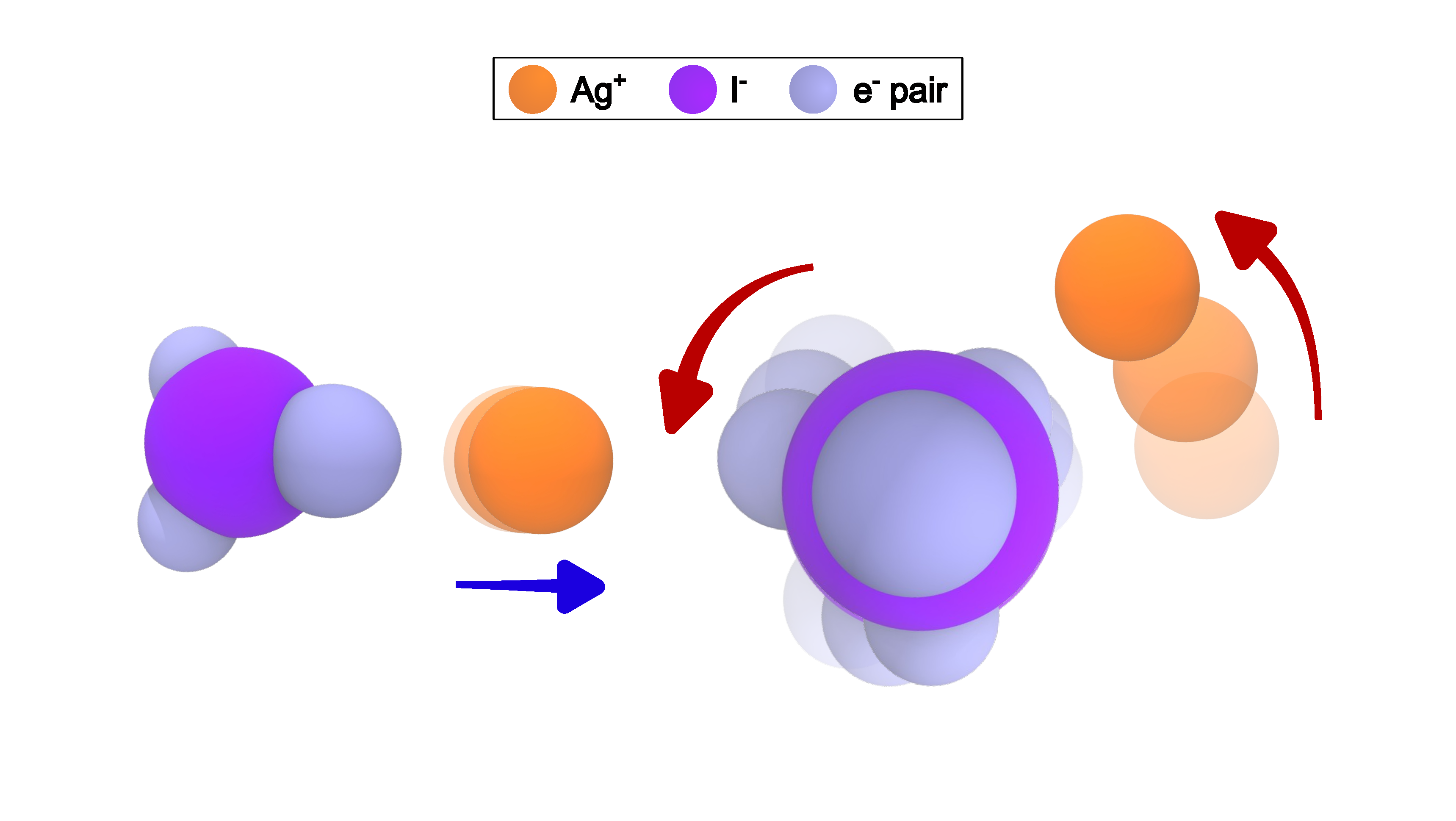
Solid-state superionic conductors (SSICs) promise significant improvements over liquid electrolytes for energy storage technologies. The advancement and application of SSICs in battery technologies are currently constrained due to an insufficient comprehension of the mechanisms underlying their ion conduction. Conduction in molecular ionic solids is well understood, where conducting ions rapidly diffuse through the rigid lattice. The rotational motion of the lattice often facilitates the rapid ionic diffusion through the “paddle-wheel” motion. This paddle-wheel motion has since become a principle for designing molecular SSICs, but a similar explanation for ion conduction in SSICs composed of monatomic ions is still needed. We predict ion conduction in the SSICs composed of monatomic ions involves 'electronic paddle-wheels,' where the hidden disorder of lone pairs (rotational motion) couple to and facilitate ion diffusion. The electronic paddle-wheel mechanism creates a universal perspective for understanding ion conductivity in both monatomic and molecular SSICs that will create design principles for engineering solid-state electrolytes from the electronic level up to the macroscale. We expect that hidden rotational electronic disorder and the resulting electronic paddle wheels will be an important marker for designing electrolytes through tuning electron pair-mobile ion interactions. However, obtaining the electron pair distribution through ab initio molecular dynamics simulations is computationally expensive. To probe and quantify this hidden electronic disorder, we leverage machine learning techniques to predict maximally localized Wannier function centers (MLWFCs) in SSICs, which represent the electron density distribution. These MLWFCs capture the subtle electronic degrees of freedom and enable the construction of long-range machine learning potentials—an advance beyond the locality constraints of conventional neural network potentials. By embedding long-range interactions in a self-consistent manner, our models retain high transferability and accuracy in capturing phenomena such as dielectric saturation. Together, this framework paves the way for a new class of data-driven, physics-aware potentials capable of unraveling and harnessing the complex interplay between electronic structure and ion transport in solid-state electrolytes.