2025 AIChE Annual Meeting
(3iv) Scaling Microbial Design and Process Engineering from the Fermenter to the Field for Environmental Applications
Author
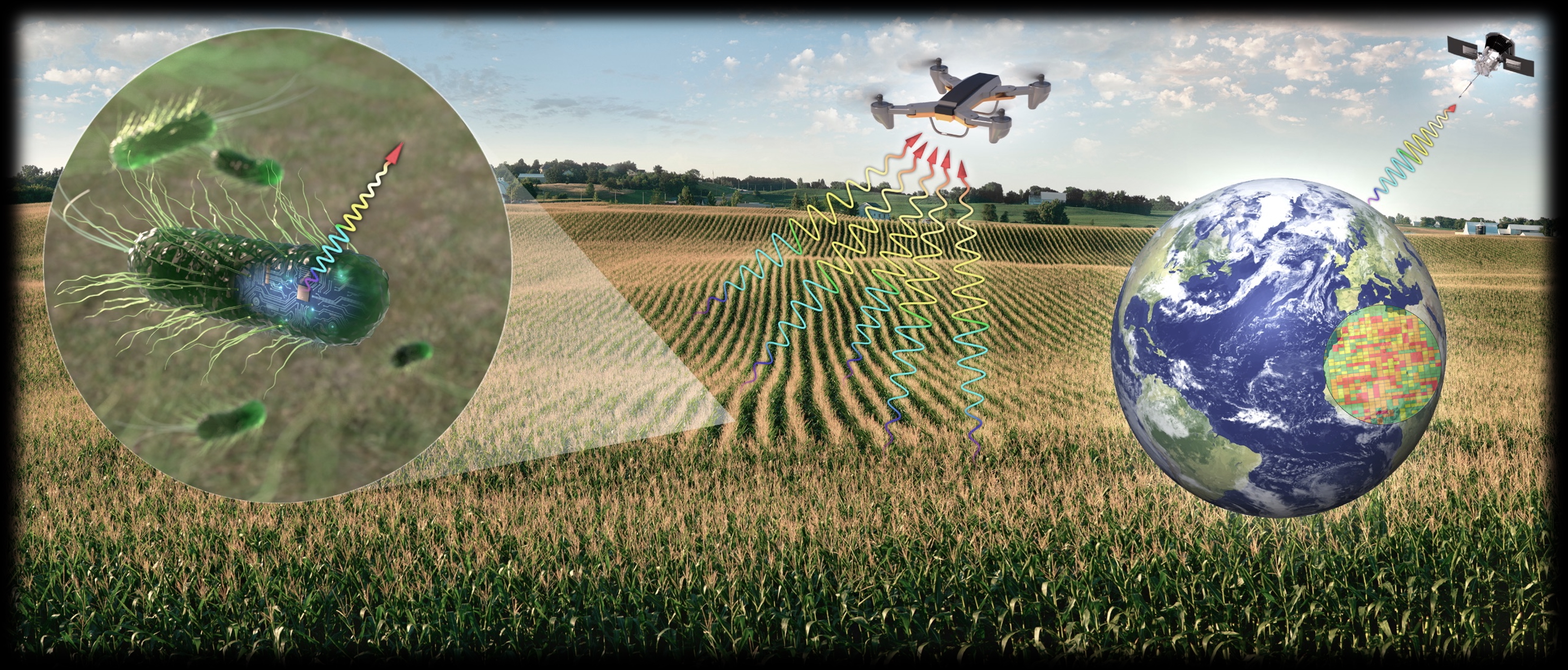
Emerging microbial and metabolic engineering technologies hold immense promise for addressing urgent environmental challenges, including pollutant sensing, remediation, and sustainable agriculture. However, safety and efficacy concerns hinder their application. My research aims to develop the tools and methods that will enable systematic studies of genetic and process design for responsible and effective environmental synthetic biology:
- Novel biomolecular tools and methods tailored for microbes in the environment
- Develop reporters, tags, and methods tailored to the environment to track, genotype, and quantify gene expression
- Design new and multiplexable hyperspectral reporters using natural and semi-synthetic metabolites and unique chemical bonds (e.g., alkynes and nitriles)
- Biomolecular measurements for engineered bacteria directly in complex terrestrial environments
- Investigate existing metagenomic databases and field sites for recombinant DNA
- Develop computational and AI-based methods to monitor environmental impact on microbial release
- Real-time monitoring of gene expression and microbiome impact in standardized terrestrial systems
- Decipher genetic and process design principles for real-world applications
- Design, build, and test genetic parts and circuits, optimizing them for standard terrestrial environments
- Metabolically engineer microorganisms with advanced and environmentally tailored genetic circuits for efficient and robust performance in complex terrestrial environments
- Develop microbial pollutant sensors and remediators to de-pollute water and soil
- Engineer microorganisms to sense and degrade pollutants, contributing to global efforts to mitigate chemical pollution, climate change, and environmental degradation
- Focus on responsible innovation and continuously test and ensure ecological safety
By developing novel biomolecular tools tailored to terrestrial environments, generating high-quality datasets, leveraging machine learning, and fostering interdisciplinary collaborations, I aim to build predictive models that unlock the potential of environmental biotechnology for health and sustainability.
Research Experience
I am a biological engineer by training with extensive experience in biomolecular engineering and organic chemistry. I completed my PhD in molecular biology and chemistry at Ben-Gurion University in Israel with Profs. Lital Alfonta and Michael Meijler. I uncovered a universally conserved mRNA structure regulating ribosome recycling (Chemla et al., Nature Communications, 2020) and developed novel tools for site-specific protein labeling via non-canonical amino acid incorporation in cell-free systems. These contributions have broad applications in genetic circuit design and synthetic biology.
As a Human Frontiers Science Program Fellow in MIT Biological Engineering, working with Prof. Christopher Voigt, I developed genetically encoded hyperspectral reporters that transmit microbial gene expression to aerial hyperspectral imaging systems in real time (Chemla et al., Nature Biotechnology, 2025). These platforms enable continuous, field-scale imaging of cellular activity, a breakthrough in environmental monitoring. I also pioneered tools for engineering undomesticated environmental bacteria (Chemla et al., PLOS ONE, 2022) and tools to track the first release of genetically modified microbes in Estonia. In this study, we examined the persistence, impact, and efficacy of pollution remediation by engineered bacteria and their recombinant DNA after thirty-five years in the environment (Chemla et al., finalizing draft for submission). Together, these works systematically enabled the study of organisms beyond lab settings and helped lay the foundation for an emerging field (Chemla et al., Nature Microbiology, 2025).
Teaching Interests
Throughout my career, teaching has been a central priority. I three different courses throughout grad school and postdoc, including probability and statistics and molecular evolution. My teaching survey scores were consistently above 4.5/5 throughout my teaching. I find teaching and mentoring both essential and deeply rewarding. As a biological engineer by training, with a core curriculum shared with chemical engineering, I am enthusiastic and well-prepared to teach a range of courses within the Chemical Engineering curriculum. My background in biomolecular engineering, synthetic biology, metabolic engineering, and biophysics enables me to offer strong value to students. I am excited to teach foundational undergraduate courses such as Chemical Process Principles, Fluid Dynamics, and Transport Phenomena.
I am also eager to contribute to advanced courses in environmental chemical and biological process engineering. These could include topics such as microbial bioprocesses for water and soil remediation, sustainable biomanufacturing, and the design of chemical-biological systems for environmental applications.