2025 AIChE Annual Meeting
(117f) Quantifying Rates and Active Sites in Carbon Surfaces That Catalyze Non-Oxidative Coupling of Methane
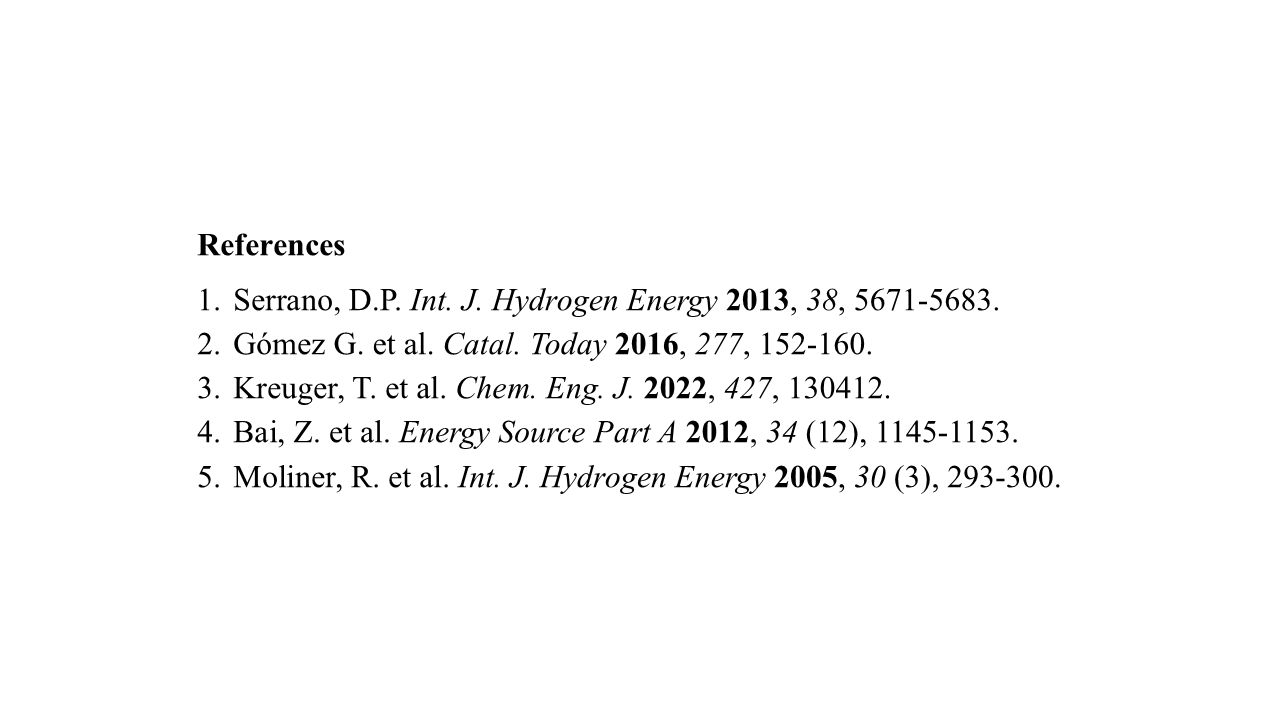
The non-oxidative coupling of methane (NOCM) is a direct route for natural gas conversion to light hydrocarbons (C2-C3) and dihydrogen at high temperatures (>1073 K). At NOCM conditions, carbon is deposited on solid surfaces via secondary reactions, changing catalyst surface area and composition and, in turn, methane conversion with time-on-stream. Methane conversion and NOCM rates show transient behavior on both oxide and carbon-based materials, reflecting an autocatalytic effect provided by surface-deposited carbon1-3. Previous studies proposed that carbon edge defects catalyze methane conversion based on temperature-programmed desorption (TPD) quantification of such sites;4,5 however, these analyses have focused on oxygen-containing defects. Here, we study carbon-based defect sites, synthesized via carbon deposition on SiO2 supports during NOCM or by varying the initial carbon structure (e.g., activated charcoal, zeolite-templated carbon, CMK-3), using reaction kinetics and H2 TPD to identify the properties of carbonaceous sites that catalyze NOCM. Reactions were carried out in the presence of SiO2 gel at 1148 K with 20.3 kPa CH4 and 0-4.1 kPa H2. Methane consumption rates increase, reach a maximum, and decrease to a pseudo-steady state value with time-on-stream, transient behavior that can be rationalized by carbon-active site formation on SiO2 followed by site loss caused by decreases in surface area upon prolonged carbon deposition. Increasing methane conversion and H2 pressure decrease the maximum NOCM rate, indicating that active sites are inhibited by hydrogen, likely due to passivation of carbon surface defects. NOCM reactions performed with varying carbon materials led to initial rates that scale with the amount of dihydrogen formed during H2 TPD prior to reaction, a proxy for the number of defect sites present. These results provide tools for quantifying carbon-based active sites which, in turn, permit the design of carbon surfaces that catalyze non-oxidative reactions of hydrocarbons.