2025 AIChE Annual Meeting
(344f) Process Engineering for Cellular Agriculture
The latest analyses indicate that cell culture media is the crucial input to reduce costs. Cell culture media is the solution that provides mammalian cells with water, nutrients, hormones and a favorable pH environment for growth and/or expression. The lifetime of cell culture media is limited by nutrient availability and waste accumulation. Replenishing individual components is uncommon due to (a) challenging and labor-intensive processes to monitor nutrient concentrations; (b) accumulation of metabolic byproducts over time; and (c) stringent regulations in the pharmaceutical industry, in which much of the biomanufacturing development has been focused on.
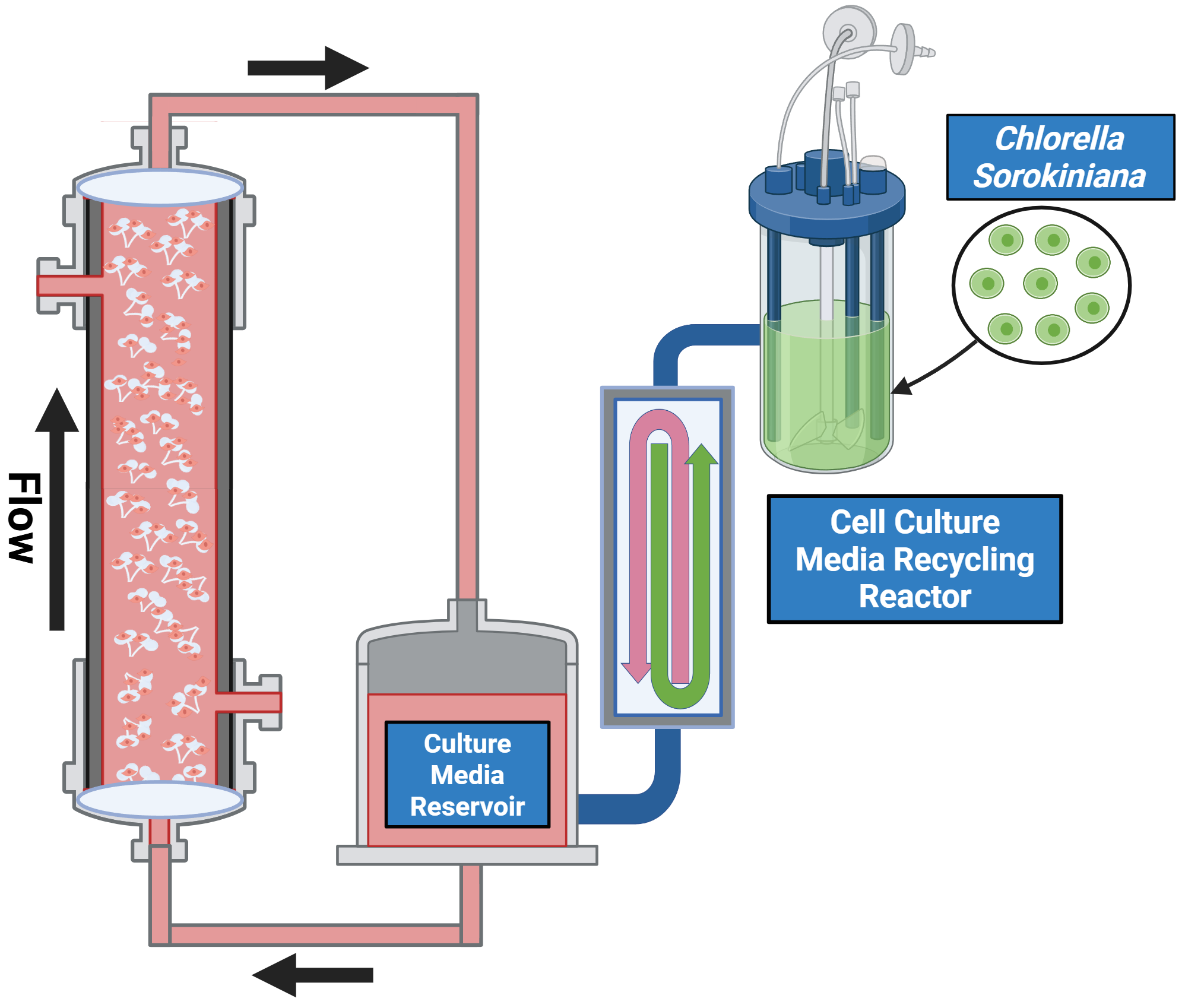
Previous work has demonstrated that algae (Chlorella sorokiniana) can remove ammonia, a by-product of cell culture. This reconditioned media can be used for further cell culture. In this work, a combined process with cell culture, media reconditioning and supplementation was developed. The reconditioned media and its impact on cell health and morphology was characterized. A continuous process is being developed for further scalability.
The growth rates of Quail Muscle Cells (QM7s) were lower with reconditioned media than fresh growth media. Nutrients that were limiting were identified and supplemented (primarily glucose), which recovered growth rates. This work demonstrates the potential of more sustainable biomanufacturing and can increase the applications and access of bioproducts.