2025 AIChE Annual Meeting
(462e) Polarization Enables Brønsted Acid Catalysis at Mild Thermochemical Conditions
Authors
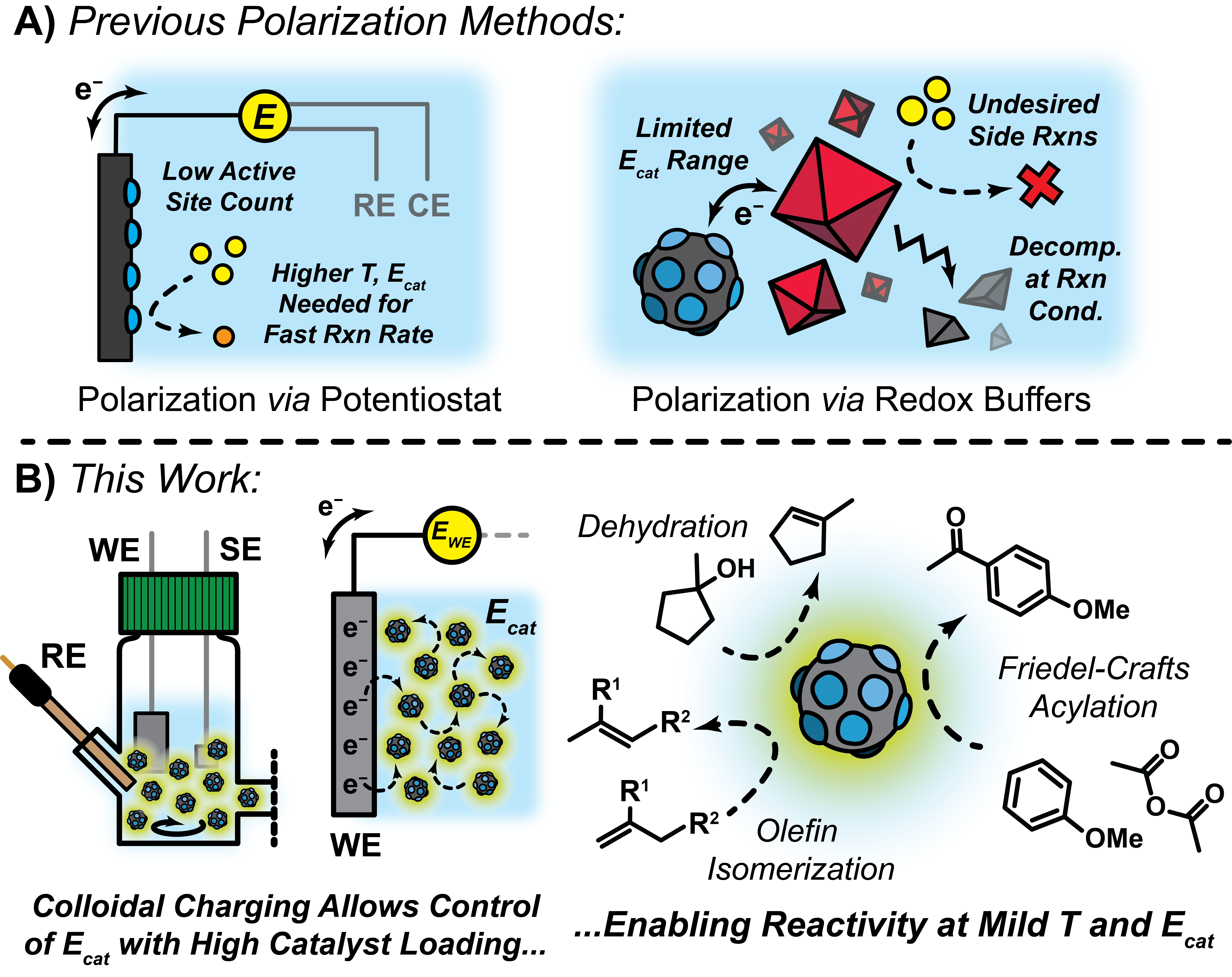
We first measure the rate-potential scaling for the dehydration of 1-methylcyclopentanol over 5% phosphotungstic acid on carbon (PTA/C), a known quantity on both 2D and 3D manifolds, in a polarized slurry reactor and show an identical rate-potential scaling to this previously studied system. We then utilize the reactor’s high catalyst loadings in tandem with the strong Ecat dependence of Brønsted acid catalysis to promote the acylation of anisole over PTA/C at room temperature, achieving reactions rates which exceed that of the same catalyst without polarization 45°C higher in temperature. Finally, we leverage these same reactor characteristics to promote the Brønsted acid catalyzed isomerization of olefins at near-room temperature, highlighting the breadth of reactivity achievable with this reactor design.
Altogether, these results further demonstrate that Ecat is a powerful control handle for Brønsted acid catalysis which enables thermochemical transformations at significantly milder conditions when paired with reactor designs that harness this property.