2025 AIChE Annual Meeting
(438g) pH-Responsive Nano- and Microparticles with Tunable Chirality for Protein Separation
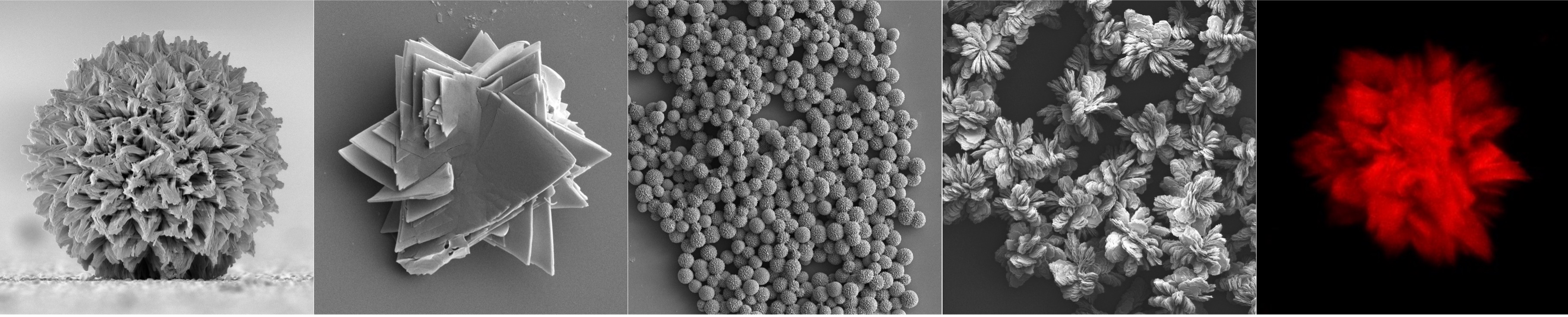
Here, we report the repertoire of self-assembled chiral microparticles composed of hierarchically organized nanosheets and linear supramolecular polymers, functionalized with amino acids. These particles, whose size, morphology, and chemical composition can be tuned by adjusting pH and physicochemical conditions, exhibit controllable chirality at multiple scales. We demonstrate that these particles display chirality-dependent affinity to various biomacromolecules, enabling the selective separation of specific proteins from complex biological fluids. For instance, we show that certain types of these spiky particles specifically trap apolipoproteins associated with cardiovascular and neurodegenerative diseases. Due to the synthesis simplicity, scalability, and broad potential for chemical modifications of the chiral structure, this approach holds significant promise for biomedical applications and diagnostics.