2025 AIChE Annual Meeting
(287f) Oxidized Cellulose-Gelatin Methacrylate Based Antimicrobial Double Network Hydrogels to Treat Osteomyelitis
Author
Sudip Mukherjee - Presenter, Rice University
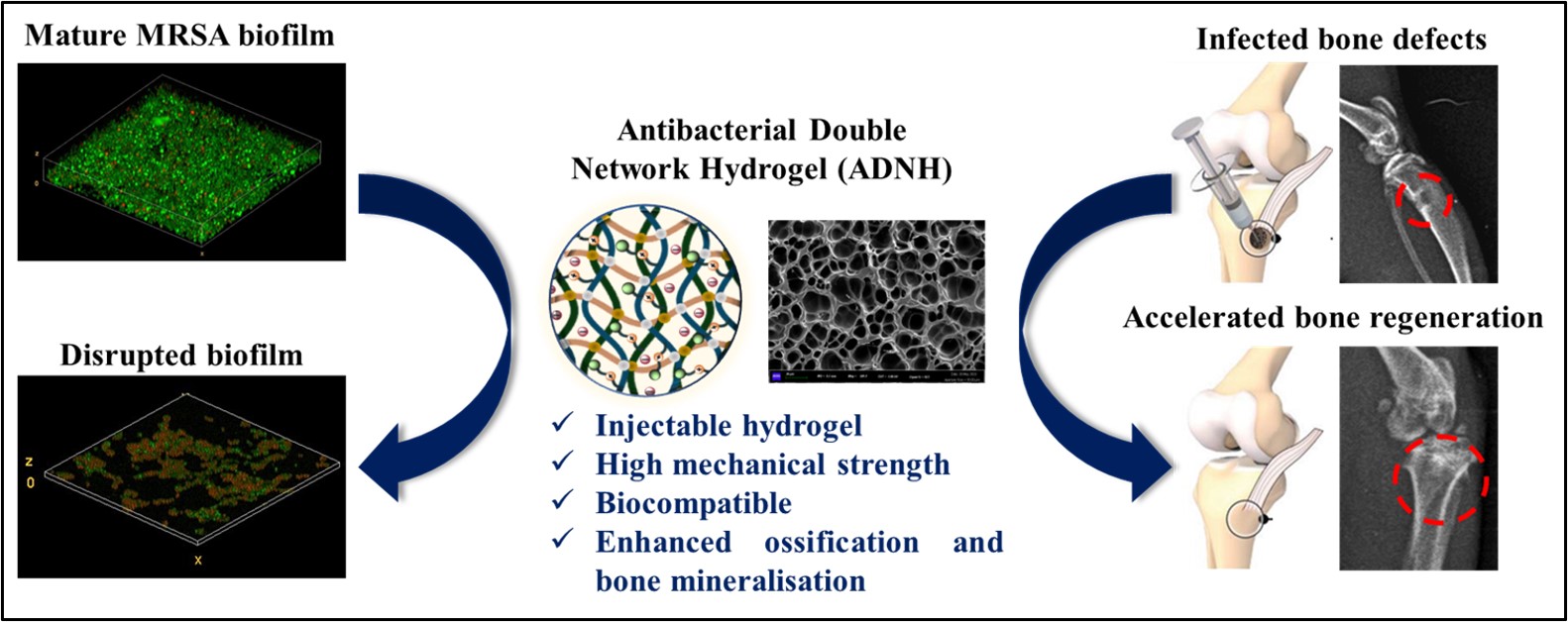
Invasive orthopedic surgeries such as arthroplasty, implantation, hip and total joint replacement etc. have remained the mainstay of majority of orthopedic complications. The sheer high volume of these invasive surgeries is often associated with a concurrent incidence of orthopedic infections. Besides debridement and revision surgery, non-invasive therapeutic strategies rely on the systemic administration of antibiotics post-operatively. However, the alarming surge of antimicrobial resistance (AMR) has only deteriorated the situation, leading to fatal consequences of chronic osteomyelitis. Towards this goal, this work reports the development of antibacterial double network hydrogels based on cellulose dialdehyde and gelatin methacrylate. The double network composition of the hydrogels exploits reversible imine bond cross-linking and radical polymerization of gelatin methacrylate. The interconnected porous hydrogels exhibit good mechanical properties with compressive strength (>400 kPa) alongside cyclic compressibility similar to the cancellous bone, promising their application in load bearing sites in their skeletal framework. The optimized hydrogel rapidly killed both planktonic and metabolically suppressed bacterial cells (~6 log reduction within 6h of incubation). The hydrogel also disrupted established mature biofilms of MRSA (>2 log reduction in bacterial viability). It exhibited excellent compatibility both in-vitro and in-vivo and significantly reduced the bacterial antigen induced reactive oxygen species (ROS) generation. Additionally, this injectable hydrogel expedited bone regeneration through enhanced ossification and bone mineralization, evidenced by enhanced calcium deposition, in a rat orthopedic wound model. The antibacterial activity of hydrogel was further validated in an MRSA-induced osteomyelitis model in rats, where treatment with the hydrogel effectively reduced bacterial burden by ~90%. Hence, this dual functional hydrogel, devoid of any antibiotics or any anti-inflammatory drug, bear immense potential and warrants further investigation to be developed as an innovative biomaterial to cure osteomyelitis.