2025 AIChE Annual Meeting
(333g) Organic Electrochemical Transistors Integrated with Molecularly Imprinted Polymer Gate Electrodes for Rapid Detection of Perfluorooctanoic Acid in Seawater
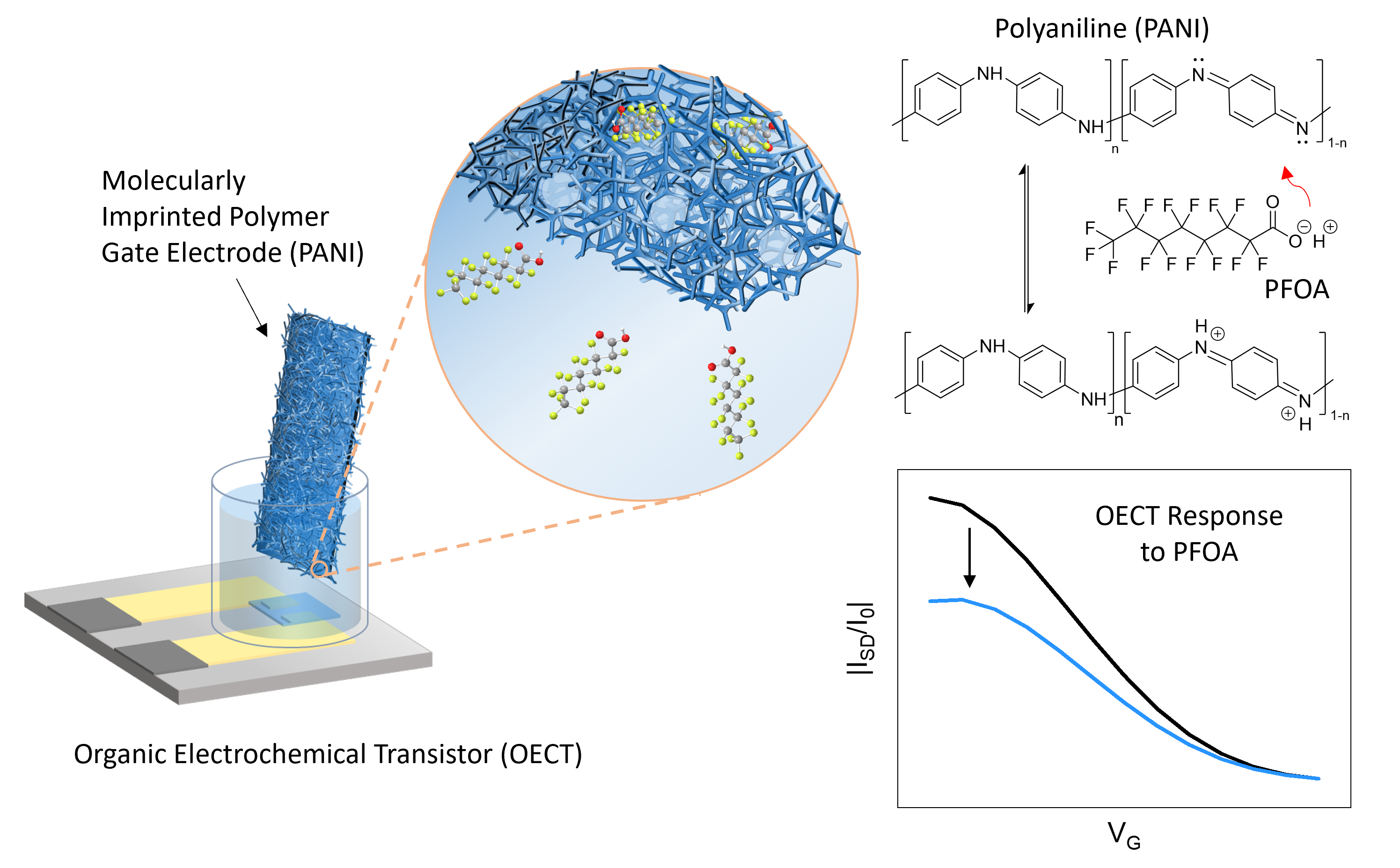
Electrochemical sensors offer significant potential for achieving cost-effective, rapid, and real-time detection of perfluorooctanoic acid (PFOA), particularly in comparison to current detection techniques, which heavily rely on costly chromatographic techniques. Here we report organic electrochemical transistors (OECTs) functionalized with molecularly imprinted polymer (MIP) and capable of selective detection of PFOA in seawater. The gate electrode is prepared using PFOA as the template molecule with aniline monomer, followed by polymerization on the electrode surface. This results in OECTs capable of the sensitive and specific detection of PFOA. The devices achieved a detection limit of 1.6 part per trillion (ppt) or 10-12 M concentration, below the regulatory advisory level of 70 ppt set by the United States Environmental Protection Agency for PFOA. The PANI-MIP exhibited a greater affinity for PFOA compared to other per- and polyfluoroalkyl substances (PFAS), such as perfluorohexanoic acid (PFHxA) and perfluoropropionic acid (PFPrA), as well as a surfactant 4-dodecylbenzenesulfonic acid (DBSA). This work demonstrates low-cost sensors enabling fast on-site pollution detection, thereby advancing environmental monitoring practices. This approach offers a practical solution for addressing PFOA detection challenges in marine environments.