2025 AIChE Annual Meeting
Multimodal Wearable Sensor Analysis to Characterize Physiological Markers of Child Emotional Dysregulation
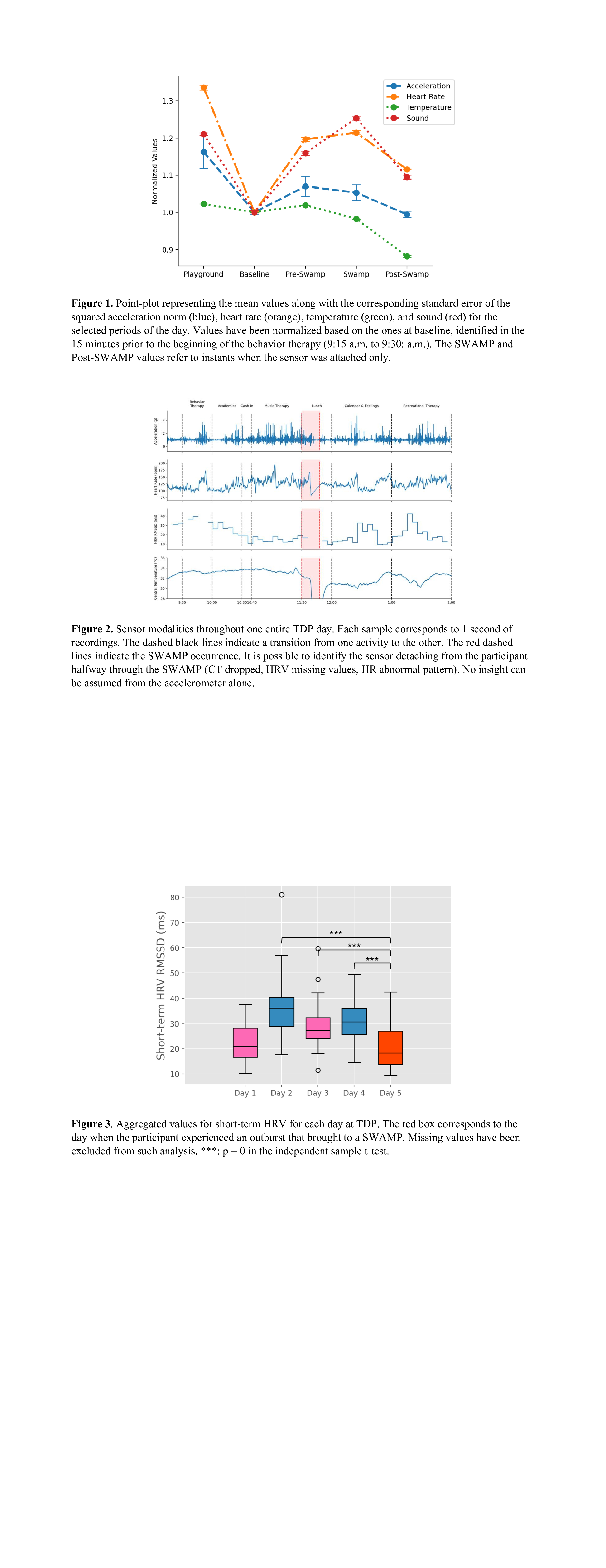
Method. Four children, ages 4–8, enrolled in the Amos Cottage Therapeutic Day Program, wore Sibel ANNE chest sensors that measured heart rate, motion, and skin temperature over 3–5 days of participation. Ambient noise levels were also recorded to assess environmental influences. Observations and clinical notes identified “Sit, Wait, and Make a Plan” (SWAMP) events, which represent moments of severe emotional dysregulation. Data from ten-minute intervals before, during, and after SWAMP events were analyzed to evaluate physiological trends.
Results. All participants assented to wearing the sensors daily, showing high tolerability and minimal data loss (<4%). Sensors occasionally detached during outdoor play or outbursts, primarily due to heat and movement. Multimodal data revealed clear physiological differences surrounding outbursts, including spikes in heart rate and motion intensity, and moderate correlations between ambient noise and on-body acceleration. However, heart rate alone did not consistently predict outbursts, underscoring the need for multimodal approaches.
Conclusion. Wearable sensors were well-tolerated and provided meaningful physiological data in a therapeutic setting, demonstrating feasibility for real-world behavioral monitoring. Future research will expand data collection and integrate multimodal features into machine learning frameworks to improve early prediction of emotional outbursts in children, supporting earlier intervention in pediatric mental health care.