2025 AIChE Annual Meeting
(189k) Microwave-Assisted Synthesis of Iron-Based MOFs and Magneto MOFs for Targeted Glioblastoma Therapy Enhanced By Sars-Cov-2-Derived Peptides
Authors
The structural and physicochemical characteristics of the synthesized MOFs were confirmed using Fourier-transform infrared spectroscopy (FTIR) to identify metal-ligand interactions and thermogravimetric analysis (TGA) to evaluate thermal stability. Transmission electron microscopy (TEM) demonstrated a uniform particle size distribution and a core-shell architecture, essential for biomedical applications. In vitro cytotoxicity assays using the MTT method revealed that peptide-functionalized Magneto MOFs exhibited selective toxicity towards glioblastoma cells while maintaining high biocompatibility with non-malignant astrocytes.
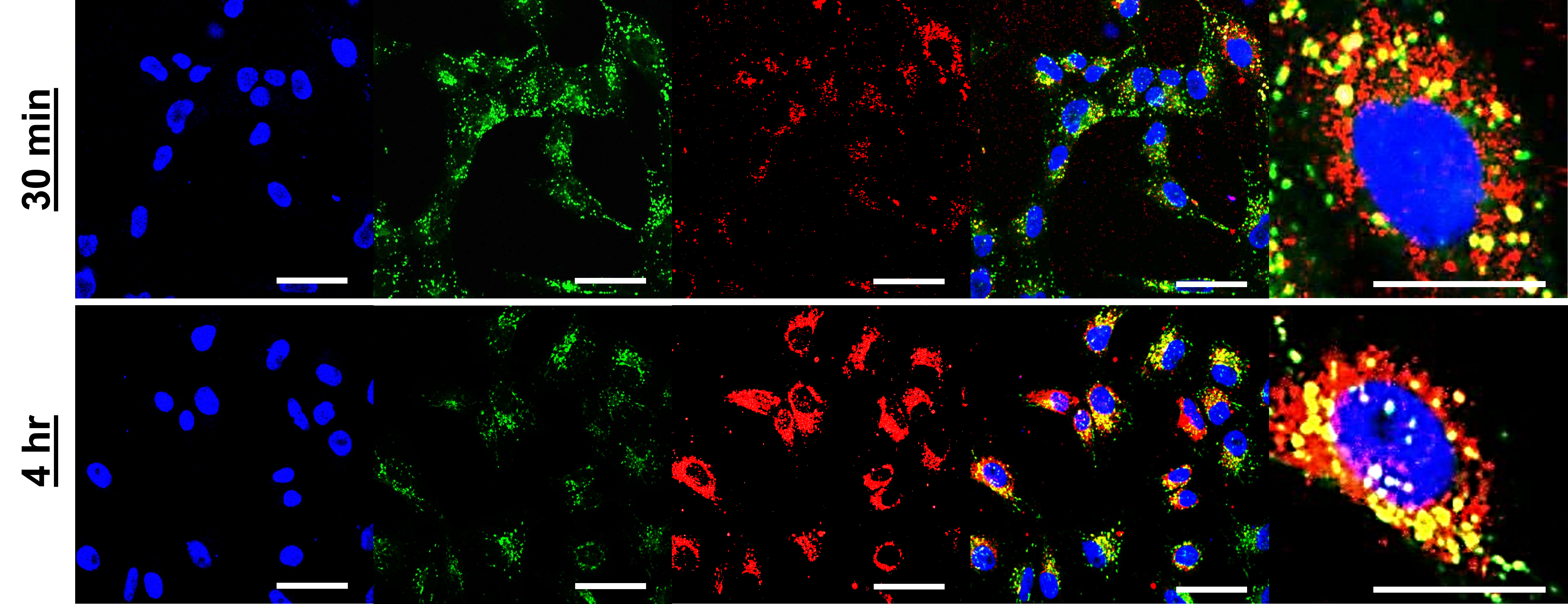
Further, endosomal escape studies indicated that the functionalized MOFs efficiently bypassed endolysosomal degradation, enhancing intracellular bioavailability of the therapeutic payloads. Transcytosis assays using an in vitro BBB model confirmed that peptide-functionalized MOFs significantly improved brain-targeted delivery, likely mediated via interactions with neuropilin-1 (NRP-1) and ACE2 receptors. These results suggest that SARS-CoV-2-derived translocating peptides leverage viral entry pathways to enhance MOF penetration into the central nervous system.
This study presents a scalable and translationally relevant nanoplatform for glioblastoma therapy, integrating the advantages of MOFs, magnetic targeting, and peptide-driven BBB permeability enhancement. The rapid microwave-assisted synthesis approach offers a cost-effective and efficient method for the next generation of brain tumor nanomedicines, providing new avenues for drug and gene delivery in neuro-oncology.