2025 AIChE Annual Meeting
(563b) Microwave-Assisted CO2 Desorption for Monolithic-Structured Direct Air Capture System
Authors
Developing an energy-efficient and fast CO2 desorption method is one of the major challenges in direct air capture technology. The temperature swing adsorption (TSA) process is a well-known method for CO2 desorption. However, its desorption time particularly for ceramic monolithic structure is long due to the slow heating and cooling of the sorbent, thereby increasing the desorption cost. However, microwave (MW) heating is fast, contactless, and focal. The polar molecules will align themselves in the presence of an electromagnetic field. In the presence of different MW powers, these molecules continuously rotate by aligning themselves in the field.
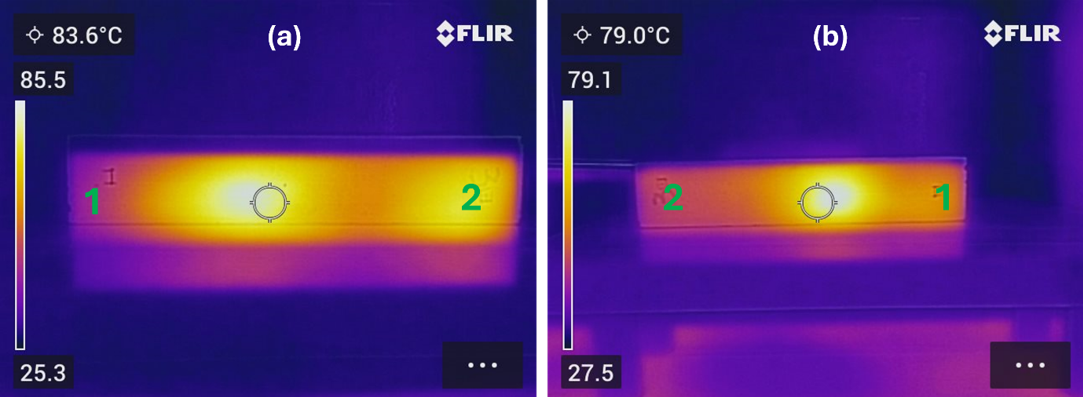
In this study, we will demonstrate MW-assisted CO2 desorption from monolith blocks coated with solid amine sorbents. Since ceramic monolith blocks and silica powder do not have permanent dipole moments, polyethyleneimine (PEI) with its permanent dipole moment of ~9 was found to be almost the sole absorber of microwave radiation as a result of focal heating the thin sorbent coating layer with hydrophilic PEI onto the monolith. As a result, MW-assisted desorption does not heat the entire monolith block and thus can cool off faster, which enables a faster switch to the adsorption phase. The quality of CO2 gas obtained from the MW-assisted desorption was found to be high. Despite these advantages, some limitations to overcome were also found during the study and will be presented.