2025 AIChE Annual Meeting
(639b) Leveraging Small Datasets for Catalysis Screening with Graph-Neural Networks: Transfer Learning for Single-Atom Alloy Exploration
Authors
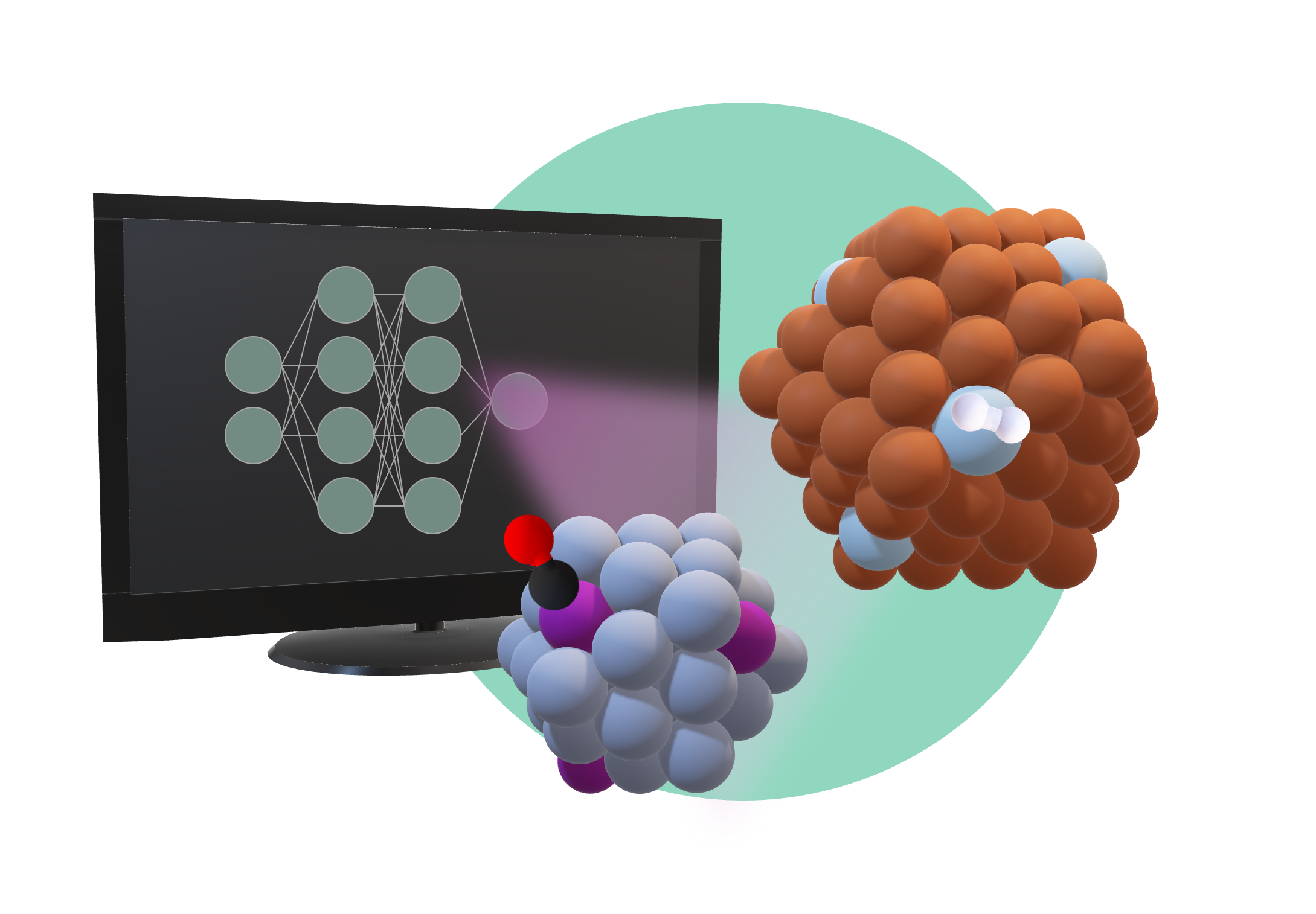
Models for the direct prediction of adsorption energies from initial geometry configurations, pre-trained with the OC2020 dataset2 (over 600k DFT relaxations for training), were chosen for TL. Several combinations of coinage metal hosts (Cu, Au, Ag), transition metal promoters, and adsorbates were chosen. In all cases, the optb86bvdw exchange-correlation functional was considered, which accounts for dispersion forces not considered in the original dataset. Varying extents of fine-tuning (i.e., freezing different blocks during training) are investigated, achieving MAE values on adsorption predictions below 0.2 eV, aligned with state-of-the-art models. This work highlights the effectiveness of TL extending foundational catalysis models to small datasets, often accessible on computational chemistry repositories, extending the use of ML in high-throughput screening.
References
[1] El Berch, John N., et al. "Advances in Simulating Dilute Alloy Nanoparticles for Catalysis." Nanoscale 17.4 (2025): 1936-53.
[2] Chanussot, Lowik, et al. "Open Catalyst 2020 (Oc20) Dataset and Community Challenges." ACS Catalysis 11.10 (2021): 6059-72.