2025 AIChE Annual Meeting
(633f) Leveraging Artificial Intelligence for Predicting Lithium Concentration in Oilfield Produced Water and Geothermal Brine
Author
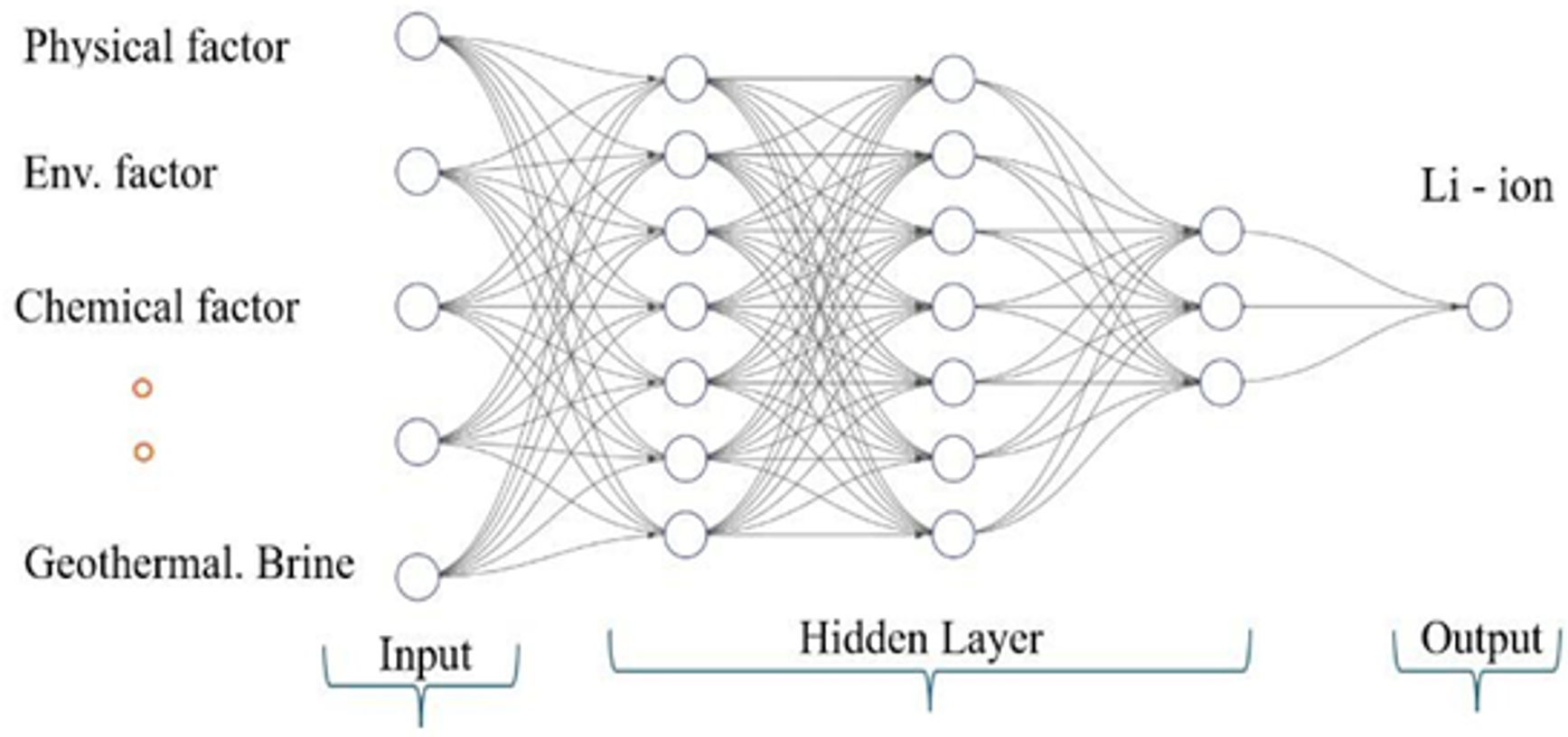
We constructed a comprehensive dataset by aggregating over 2,000 publicly available water chemistry records from oil and gas fields and geothermal reservoirs across the United States, Canada, and Europe. The dataset includes 15 key parameters such as pH, temperature, salinity, Na⁺, K⁺, Ca²⁺, Mg²⁺, Sr²⁺, Ba²⁺, Cl⁻, SO₄²⁻, and total dissolved solids (TDS). After data preprocessing and feature engineering, a suite of supervised machine learning (ML) algorithms, including Random Forest Regressor (RFR), Gradient Boosting Machine (GBM), Support Vector Regression (SVR), and XGBoost, was trained and validated. Model performance was evaluated using root mean square error (RMSE), R² score, and mean absolute error (MAE) on an 80:20 train-test split with 5-fold cross-validation.
Among the tested models, XGBoost demonstrated superior performance, achieving an R² of 0.92, RMSE of 13.5 mg/L, and MAE of 9.4 mg/L on the test dataset. SHAP (SHapley Additive exPlanations) values were employed to interpret model predictions and identify the most influential features. The results revealed that TDS, temperature, Na⁺, Cl⁻, and Mg²⁺ concentrations were the top contributors to lithium concentration predictions, highlighting strong geochemical correlations within brine chemistry.
Additionally, a spatial model integrating lithium prediction with geostatistical mapping was developed using ArcGIS Pro. The resulting lithium concentration heatmaps for formations such as the Smackover (U.S.), Duvernay (Canada), and Upper Rhine Graben (Germany) provide decision-making tools for site prioritization and techno-economic analysis. These predictive maps also align with reported lithium anomalies, validating model effectiveness in regional exploration strategies.
This study provides the first robust AI-based framework to estimate lithium concentrations in OFPW and geothermal brine using routinely measured water chemistry parameters. The methodology not only accelerates resource evaluation but also reduces the need for extensive sampling and lab testing. With strategic deployment, this AI-driven tool can enhance domestic lithium supply chains, support circular water reuse, and reduce the environmental footprint of critical mineral extraction. Future work includes real-time sensor data integration, laboratory validation of AI predictions, and techno-economic modeling of lithium recovery potential across various formations.