2025 AIChE Annual Meeting
(383m) Integrating Multiscale Modeling and High-Throughput Screening to Advance Catalysts for Green Chemistry
Author
I am interested in working on the intersection between chemistry and material sciences, specifically focusing on the technical aspects of utilizing machine learning (ML) for materials discovery in various applications such as thin-film photovoltaics, photo/electrocatalysis, batteries, and novel material synthesis. My goal is to contribute to the development of sustainable processes that leverage renewable resources.
My expertise lies in employing computational techniques to investigate the relationship between the structure and properties of materials, particularly their chemical and electronic properties. Additionally, I am skilled in implementing ML-based screening methods to create predictive models for material performance and stability. I have extensive experience using cutting-edge automation and computational tools in the fields of solid-state chemistry and biopharmaceutics. I enjoy working collaboratively with chemists, engineers, and product managers to design, simulate, and optimize active materials and processes. Additionally, my prior three-year industrial experience as a team leader in the Catalytic Reforming Unit at the Indian Oil Corporation Limited, Digboi Refinery, India, has equipped me with valuable leadership skills, strong work ethics, and strategic planning abilities that enable me to thrive in challenging work environments. During my PhD and postdoctoral work, I also had the opportunity to mentor undergraduate and graduate students on research projects, which has honed my ability to independently formulate and lead projects to successful completion.
PROFESSIONAL SUMMARY
1. Ph.D. in Chemical Engineering with expertise in computational materials discovery and process optimization, leveraging molecular modeling (atomistic, dynamics, and mesoscale), statistics, and data science.
2. Conducted independent computational research in catalysis, machine learning, energy storage materials, and gas sensing, leading to 11 publications in reputed journals and presentations at 20+ national conferences. (Google Scholar) (Citations: 432, H-index: 6)
3. Demonstrated ability to thrive working in diverse, collaborative environments with cross-functional teams across institutions such as KIST (Korea), Washington State University, Pacific Northwest National Laboratory, UC Boulder, and DOE Research Centers.
4. Proficient in scientific computing and material simulations using VASP, CP2K, and ASE, and skilled in programming & machine learning (ML) tools (Python, Linux).
5. Industry experience: 3 years as a production/shift engineer at Indian Oil Corporation, managing operations, process control, and maintenance of Catalytic Reforming and Hydrogen Storage units.
RESEARCH HIGHLIGHTS
During my graduate and postdoctoral research, I had opportunities to participate in a full range of projects in the area of energy and climate securities. Currently at LLNL (Lawrence Livermore National Laboratory), I am a main contributor to the Modeling and Simulation Crosscutting Activity within the Hydrogen Materials Advanced Research Consortium (HyMARC)—a flagship effort spanning five national laboratories established and funded by the Department of Energy (DOE) to develop materials-based solutions for clean, low-cost hydrogen storage. In this role, I am responsible for integrating simulations with experiments to investigate catalyst degradation mechanisms across catalyst phases during hydrogen production via dehydrogenation of liquid organic hydrogen carriers (LOHC). Additionally, as the theory lead for a project in the DOE Office of Fossil Energy and Carbon Management (FECM), I am working on “Direct Air Reactive Capture and Conversion for Utility-Scale Energy Storage.” This project aims to develop next-generation materials that minimize reliance on Ru, assess alternative supports, and evaluate CO2 uptake performance across different Na particle morphologies through simulation. Furthermore, I lead atomistic simulation activities for an LLNL-funded project focused on integrating parameters across a broad range of scales—spanning atomistic and mesoscale to process and system levels—within a Systems-to-Atoms (S2A) Modeling framework. This research seeks to achieve multivariate optimization, especially in H2 production, storage, delivery, and utilization, ultimately to maximize the potential of hydrogen infrastructure. These investigations have resulted in 10 peer-reviewed publications in high-profile journals, such as Computers & Chemical Engineering, ACS Catalysis, and JACS.
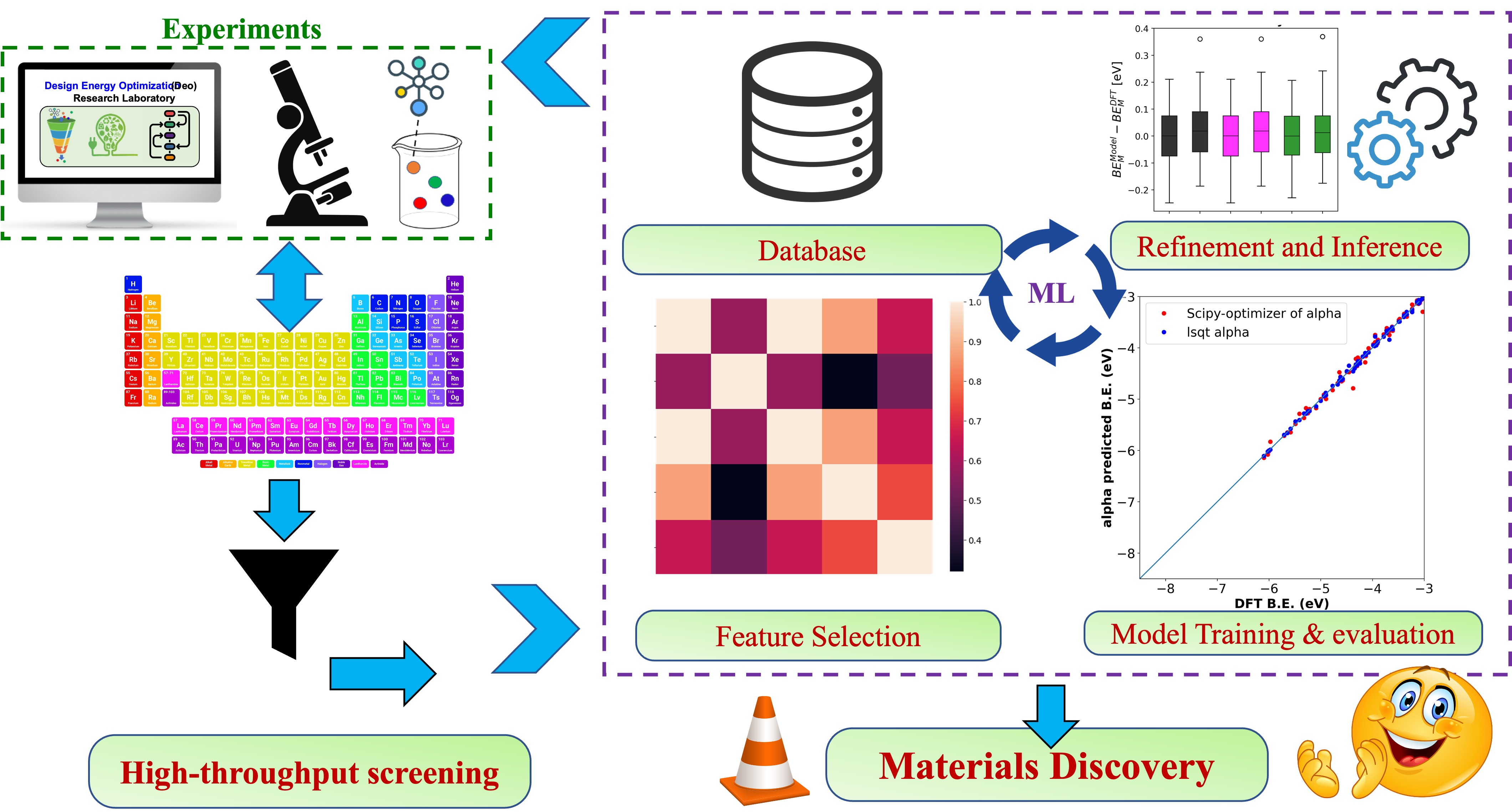
During my postdoctoral work at SUNCAT (Stanford University), I successfully developed physical insights complemented ML approaches towards swift predictions of metal ad-atom diffusion barriers and surface/segregation energies for enhanced understanding of sintering and catalyst durability. Moreover, I successfully integrated experimental and theoretical data (which will be uploaded into an online database, CatHub, https://www.catalysis-hub.org) for high-quality predictions of material performance towards electrochemical reactions (e.g., oxygen reduction reaction, ORR) using ML techniques. Moreover, my PhD dissertation investigated reaction chemistry (hydrodeoxygenation and CO oxidation) at oxide/metal interfaces that take advantage of the properties of the interfacial components. We used DFT calculations, microkinetic modelling, and a Bayesian statistical inference approach to identify dominant reaction networks, form a descriptor-based design model, and predict optimal catalytic activity. I have also worked on a collaborative project to tune the conductivity in PEO6 electrolyte-based Li-ion batteries, where I achieved an order of magnitude increase in room temperature ionic Li+ conductivity via defects and interstitial migrations.
SELECTED PUBLICATIONS
My publications can be found via my Google Scholar page(https://scholar.google.com/citations?hl=en&user=ZHEdfbsAAAAJ&view_op=list_works&sortby=pubdate).
Figure. Materials optimization methodology using a machine-learning (ML) based approach and Bayesian optimization via integration between theory and experiments.