2025 AIChE Annual Meeting
(130i) Improved Reaxff Parameters for Accurate Modeling of Small Boron Clusters and Icosahedral Boron Crystallization
icosahedra, have promising applications in advanced electronics, energy storage, and super-hard materials. However, synthesizing defect-free, high-quality crystals remains challenging, emphasizing the need for computational modeling to predict optimal synthesis conditions. In this study, we address critical limitations in existing computational models by refining a reactive force field (ReaxFF) specifically tailored for boron systems.
We employed density functional theory (DFT) calculations to systematically refine ReaxFF parameters, aiming to accurately reproduce the energetic hierarchy and structural stability of small boron clusters, including B
isomers. Our improved parameter set demonstrates significantly enhanced agreement with DFT predictions for a diverse collection of clusters containing between 8 and 100 boron atoms.
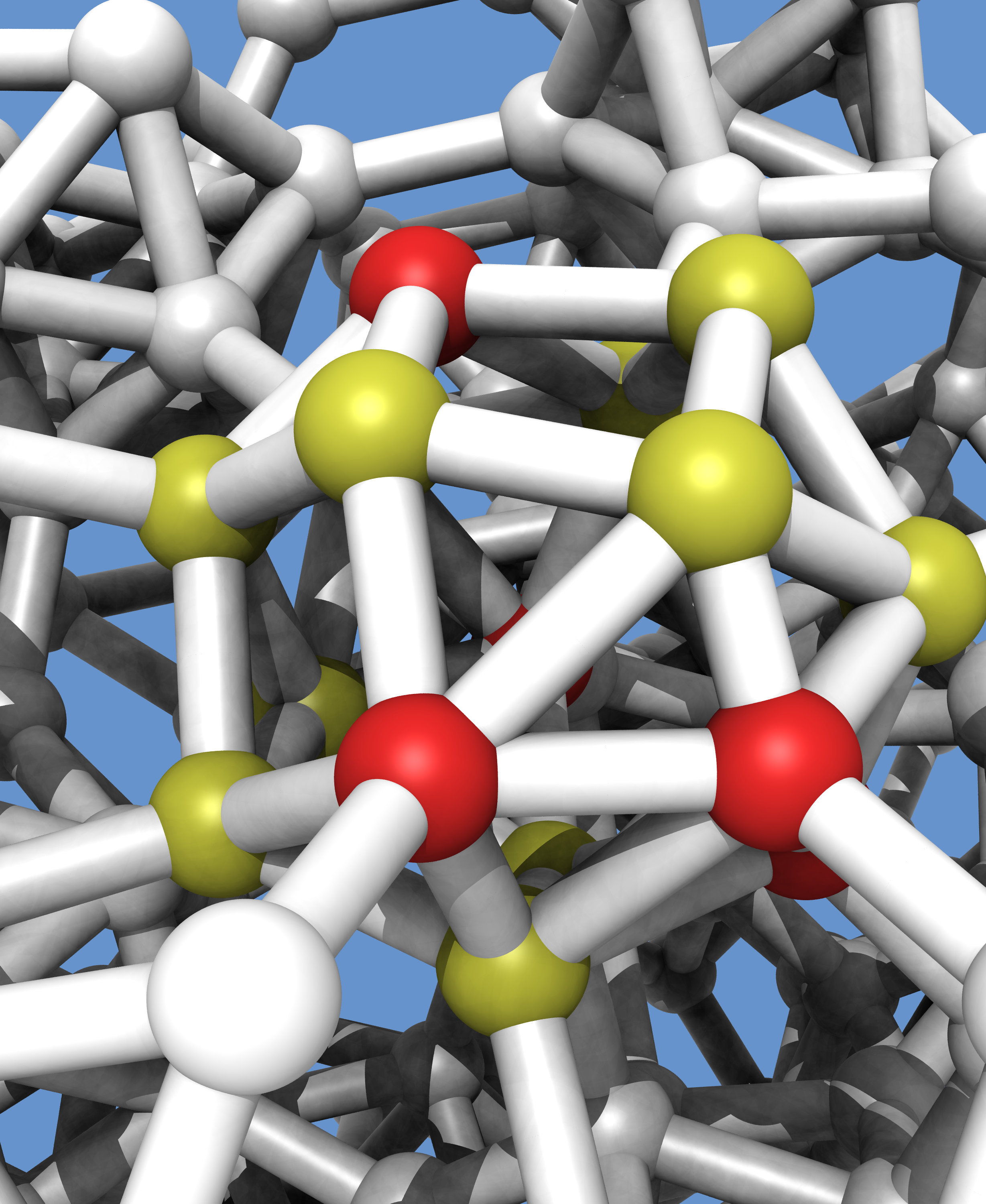
Using molecular dynamics (MD) simulations with these optimized parameters, we investigated the nucleation and growth of icosahedral boron crystals from a supercooled melt. The results indicate a clear correlation between parameter accuracy and the emergence of local icosahedral structure. Furthermore, our simulations highlight the spontaneous formation of stable boron clusters with pronounced icosahedral motifs, even without seeding.
We also evaluated the performance of different ReaxFF parameterizations in predicting boron solubility in molten nickel, a scenario relevant for practical synthesis techniques. The refined parameters produce boron solubility values closer to experimentally reported data, demonstrating the potential of our improved force field in modeling complex interactions at metal-boron interfaces.
Overall, our refined ReaxFF parameter set enhances the fidelity of simulations involving boron clusters and icosahedral structures, providing deeper insights into the growth mechanisms and stability conditions necessary for producing high-quality boron materials.