2025 AIChE Annual Meeting
(28e) Hydrothermal Synthesis and Chemical Activation of Mesoporous Carbon Derived from Musa Paradisiaca Residues for the Removal of Bisphenol-a from Water
Authors
María José Chávez - Presenter, Applied Circular Engineering & Simulation Group (GICAS), Universidad San Francisco de Quito USFQ
Camily Rivadeneira - Presenter, Universidad San Francisco de Quito USFQ
Erick Mendizábal - Presenter, Universidad San Francisco de Quito USFQ
Andrea C. Landázuri - Presenter, Universidad San Francisco De Quito
Andrés Lagos, Universidad San Francisco de Quito
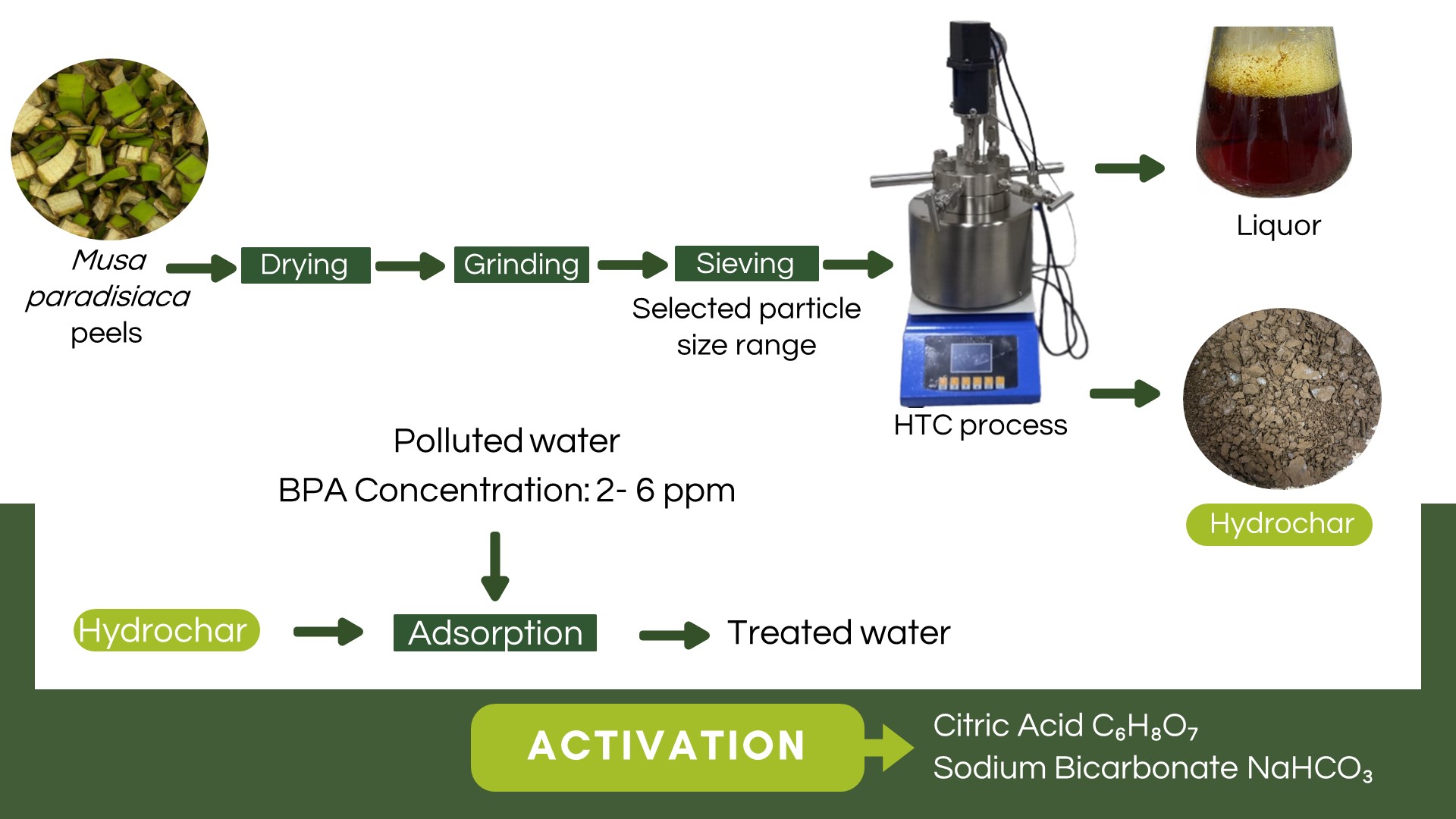
This study examines the conversion of green plantain peels (Musa paradisiaca), an abundant agricultural waste in Ecuador, into hydrothermally treated nanostructured carbon (also known as hydrochar) activated for the removal of bisphenol-A (BPA), a novel entity, from water. The materials were synthesized through hydrothermal carbonization followed by chemical activation with citric acid and sodium bicarbonate. BPA adsorption capacity was assessed through kinetic and isothermal studies, which showed a significant improvement in removal efficiency after chemical activation. Physicochemical characterization revealed surface modifications that enhance contaminant adsorption. The results indicate that these activated hydrochars represent a sustainable and economically viable alternative for treating BPA-contaminated water, utilizing local agricultural waste. This research aids in advancing green technologies for environmental cleanup and the valorizations of organic waste, fostering the principles of Circular Engineering.