2025 AIChE Annual Meeting
(521b) A High-Throughput, Size-Resolved Elemental Analysis Technique for Nano-Catalysts
Authors
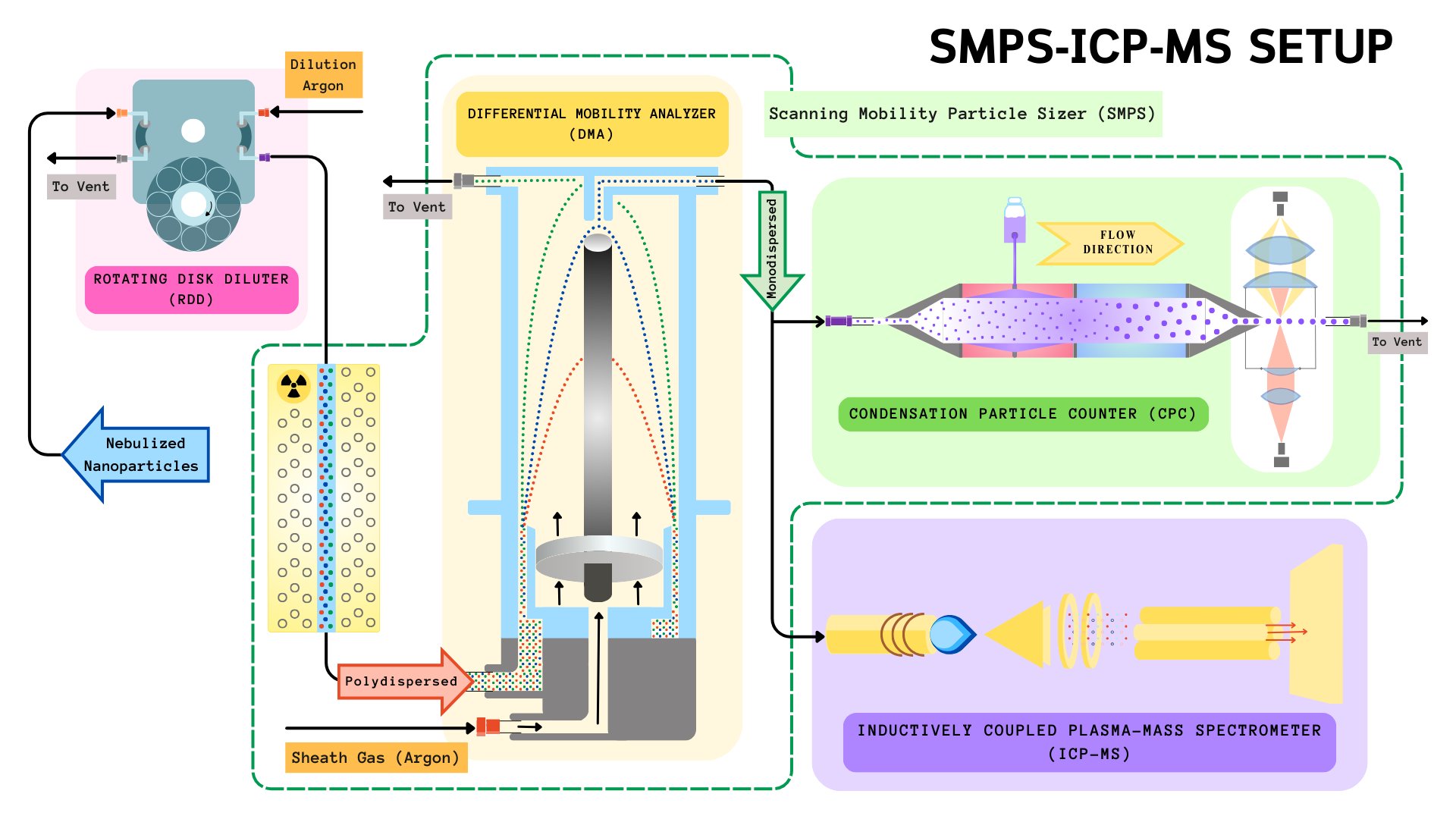
The new approach classifies particles based on their electrical mobility, then determines elemental composition using mass spectrometric technique. Dynamic shape factor corrections enable accurate size measurements for a variety of morphologies, including both cubic and tetrahedral nanoparticles. This method is demonstrated on copper-silver and cobalt-nickel-tin nanocatalysts, which are relevant for carbon dioxide reduction and oxygen evolution reactions, respectively. Results align closely with those obtained via electron microscopy, confirming both the reliability and the high-throughput nature of this platform.
By providing ensemble-level characterization without the need for time-intensive imaging, this technique addresses a significant bottleneck in catalyst development. The ability to rapidly map size distributions and elemental compositions in a single run supports a more efficient “predict–synthesize–test” cycle. In addition to catalysis, the approach may be extended to other advanced materials that require precise control over size and composition, offering a powerful new tool for research, process optimization, and quality assurance.