2025 AIChE Annual Meeting
(233g) H-Bonded Organic-Inorganic Frameworks-Based Mixed Matrix Membranes for Selective Ion Removal with Electrodialysis
Authors
Hong-Minh Tran - Presenter, University of Oklahoma
Jasasmita Das, University of Oklahoma
Chuhyung Kim, Lawrence Berkeley National Laboratory
Chaochao Dun, Lawrence Berkeley National Laboratory
Nicholas Gurieff, Rio Tinto
Nicholas Gurieff, Rio Tinto
Jeffrey J. Urban, Lawrence Berkeley National Laboratory
Andrew Haddad, Lawrence Berkeley National Laboratory
Ngoc Bui, University of Oklahoma
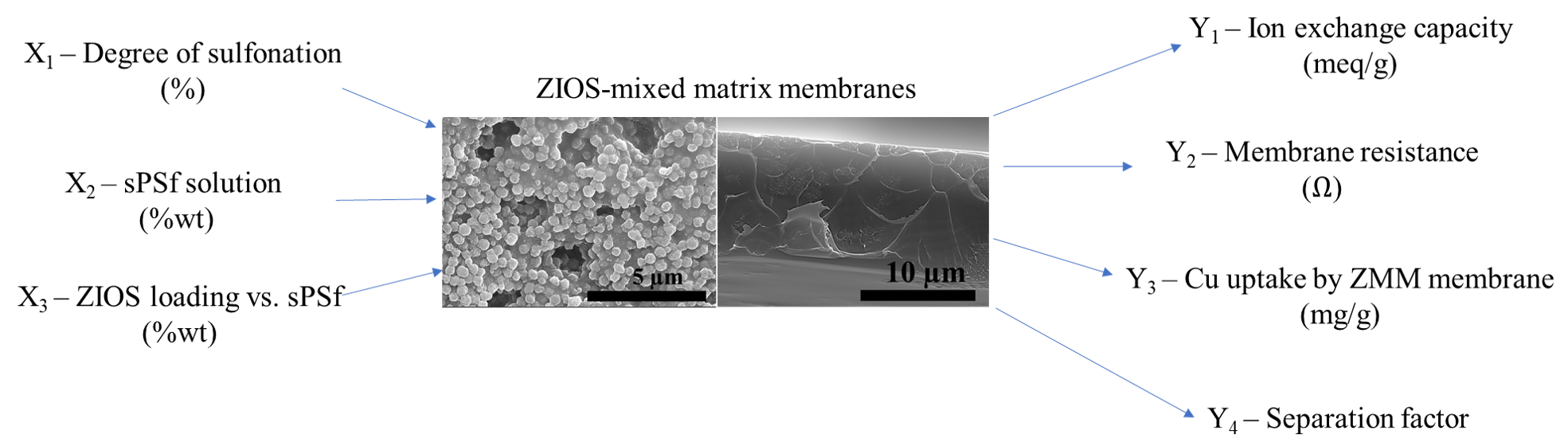
The mining industry has been an irreplaceable part of the intricate industrial system, supplying essential metal stocks for various sectors, including state-of-the-art domains such as electric vehicles, electronics, renewable energy technologies, etc. However, the primary by-product of mining operations is acid mine drainage (AMD), with highly acidic water and highly concentrated heavy metal ions (e.g., Cu, Pb, Zn, Fe, Cd, Mn, Al), severely compromising the aesthetic environment and posing a serious threat to living creatures. Recently, electrodialysis has been among the cost-effective and energy-effective methods for recovering critical metals from waste streams, especially from AMD effluent. In this work, we incorporate zinc imidazole salicylaldoxime supramolecule (ZIOS), a member of emerging materials categorized as H-bonded Organic-Inorganic Frameworks (HOIFs), into mixed matrix membranes for selective removal of critical metal ions from AMD waste streams. ZIOS adsorbent, previously reported to have high selective affinity towards Cu2+ ions as solid powder,[1] is embedded into sulfonated-polysulfone (sPSf) polymeric membranes via solvent evaporation method, creating a series of ZIOS cation-exchange membranes (ZCMs). Three factors of the mixed matrix membrane fabrication are prioritized, including sulfonation degree (X1), sPSf concentration (X2; wt%), and ZIOS loading (X3; wt%) in the casting solution. The physicochemical properties and selective behaviors of ZCM membranes (Yi) are examined and correlated with Xi factors. The experimental design used in this work constructs a framework for understanding and optimizing ZCM to achieve enhanced selectivity, enabling efficient resource recovery from AMD waste streams.
[1] N. T. Bui, Nat Commun 2020, 11, 3947.