2025 AIChE Annual Meeting
(684f) Genetic Engineering of Cyanobacteria for Phosphorus Recovery from Wastewater
Authors
Leonardo Gonzalez, University of Wisconsin-Madison
Victor Zavala, University of Wisconsin-Madison
Brian Pfleger, University of California, Berkeley
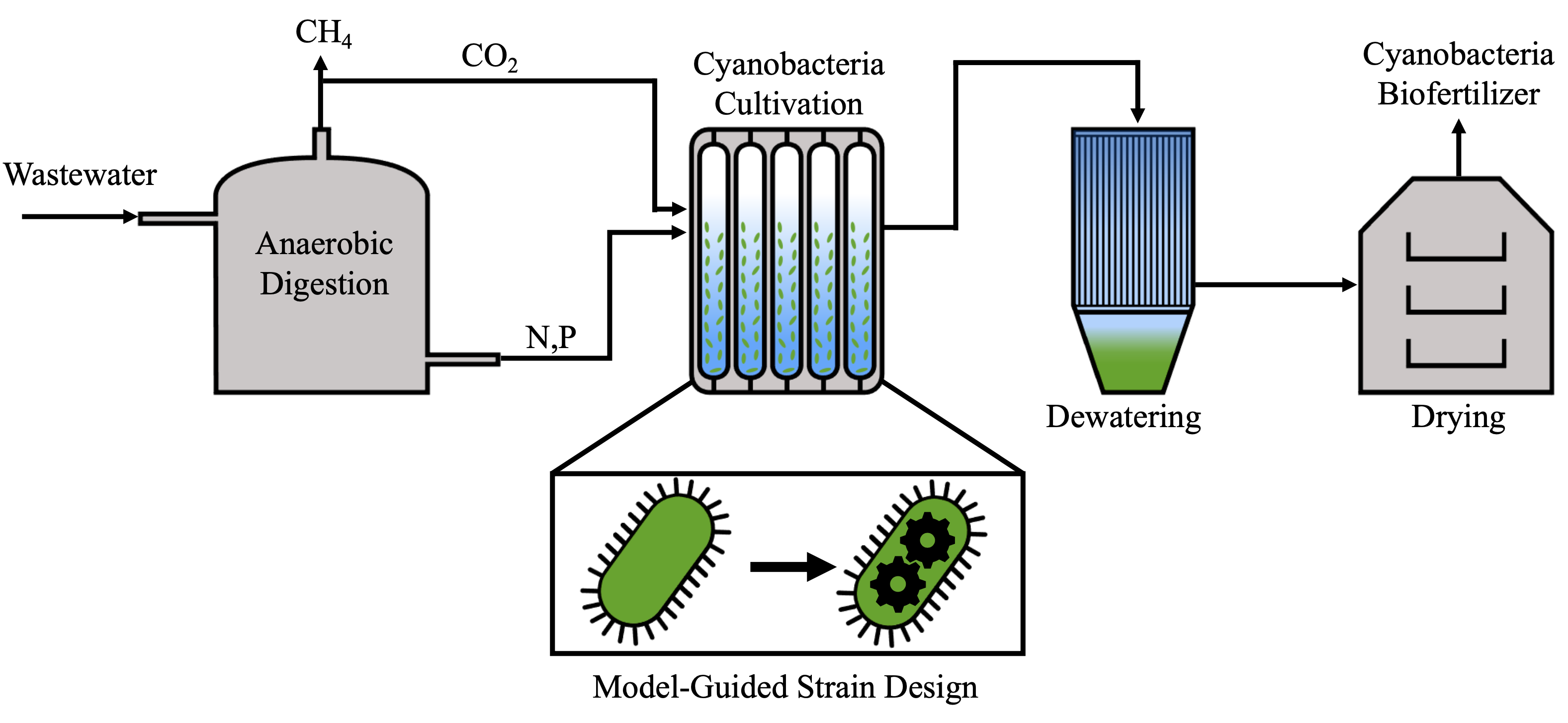
Improved methods of phosphorus recycling from wastewater are crucial for developing sustainable farming practices. Bioaccumulation is a promising strategy, as microbes have evolved to scavenge nutrients from their environment and concentrate them into biomass, which can be relatively easily separated from the scavenged purge water. In particular, cyanobacteria have been targeted as potential wastewater nutrient scavenging microbes. The main benefits of utilizing cyanobacteria are CO2 fixation during growth, inexpensive growth media, and resilience to a wide range of growth conditions. In the case of phosphorus, unmodified cyanobacteria can achieve high rates of uptake and dense storage in the form of polyphosphate, but phosphorus uptake is heavily regulated, especially the high-affinity transporter pstSCAB. By introducing a strong inducible promoter upstream of pstSCAB in Synechococcus sp. PCC 7002, phosphate uptake rate is increased 4-fold in batch fermentation, and phosphate accumulation continues well into stationary phase. In fed batch fermentation, biomass phosphate density is increased from ~1% w/w in the wild type to ~14% w/w in the pstSCAB overexpression strain. Using systems engineering modeling, we then apply these data to an example scenario of dairy wastewater treatment and highlight improved economic metrics.