2025 AIChE Annual Meeting
(674b) Exploring Optimal Combinations of Metathesis and Dehydrogenation Catalysts and Supports for Tandem Alkane Cross-Metathesis of Polyethylene
Authors
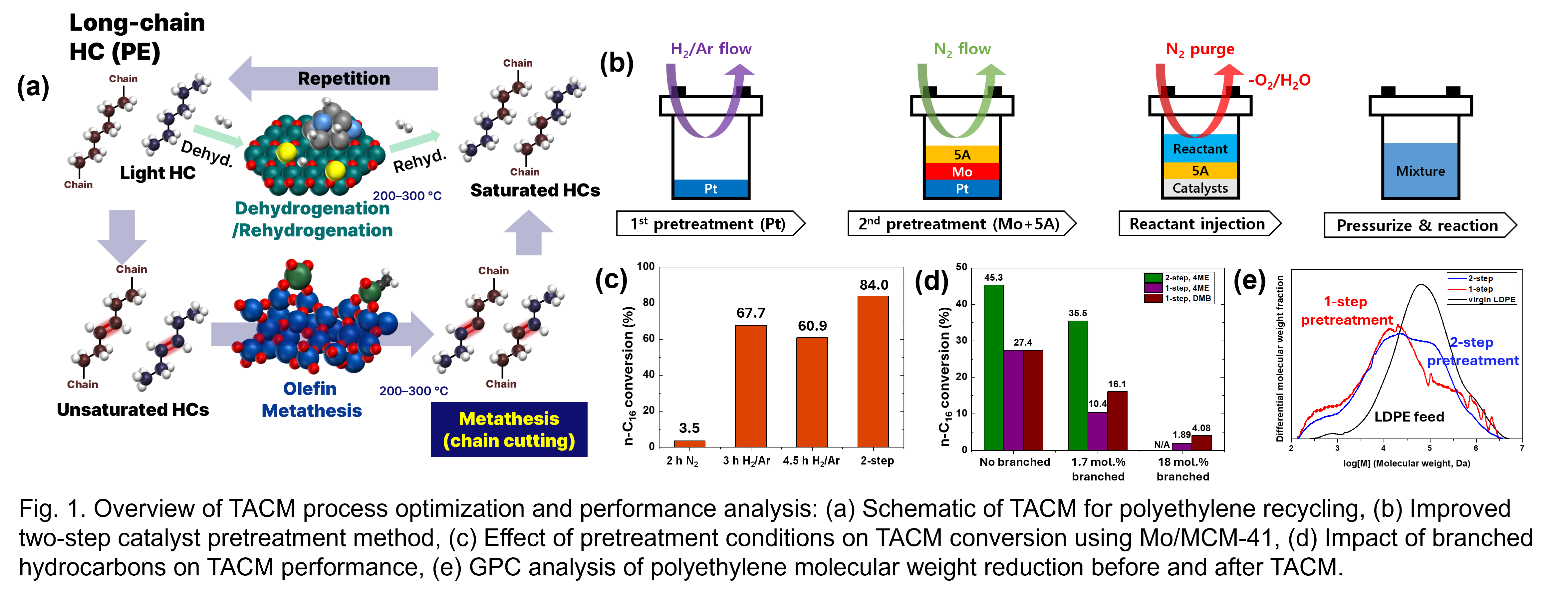
This study systematically investigated catalytic performance enhancements in TACM by exploring a range of catalytic active sites (MoOx, WOx) and various supports (MCM-41, SiO₂, Al₂O₃). Notably, MoOx/MCM-41 emerges as highly effective for the olefin metathesis catalyst, achieving significant polyethylene molecular weight reduction at relatively low operating temperatures (250-300°C). We identified that Mo-based catalyst deactivation arose primarily from metal migration during pretreatment, leading us to develop a novel two-step pretreatment protocol. This innovation effectively prevented Mo migration, thus significantly boosting catalyst stability and reactivity. Furthermore, this work explored diverse catalyst combinations by pairing metathesis catalysts (Mo and W-based) with robust dehydrogenation catalysts, including commercial Pt/Al₂O₃. Our results demonstrated that catalyst combinations and supports dramatically influenced TACM efficacy, highlighting the superior performance of mesoporous MCM-41 support-based catalysts over traditional amorphous silica or alumina. We also identified critical solvent effects, notably revealing that branched alkanes and olefins, potential promoters in olefin metathesis, significantly inhibited the tandem catalytic system. These findings underscore the importance of solvent selection, recommending linear alkanes as ideal solvents to maintain high catalyst activity and reaction efficiency.
Ultimately, this comprehensive investigation provides valuable insights into catalyst design, pretreatment optimization, and solvent choice, thereby establishing a robust, hydrogen-independent pathway for polyolefin recycling. These advancements bring TACM closer to practical viability, offering a sustainable solution to the global plastic waste crisis.