2025 AIChE Annual Meeting
(64h) Engineering Catalyst–Membrane Interfaces for Enhanced Electrochemical CO2 Capture
Authors
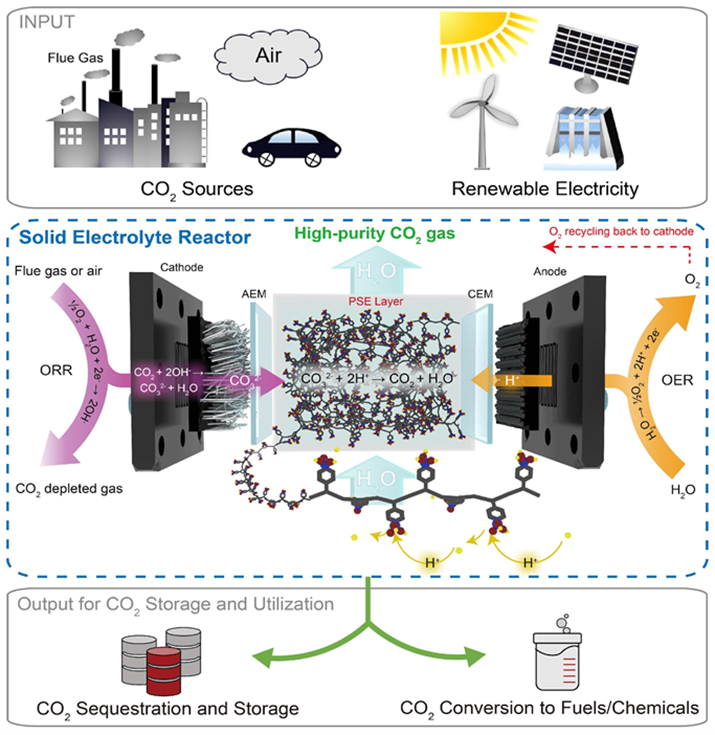
Unlike conventional methods that rely on energy-intensive thermal swings or chemical looping, our approach utilizes electrochemical pH swings and ion-selective membranes to efficiently capture high-purity CO2 with reduced energy consumption. Through oxygen reduction and water electrolysis, the reactor creates a localized high-pH environment, promoting CO2 absorption and selective ion transport. Its modular design allows for flexible deployment across various carbon sources, from industrial emissions to direct air capture. We further engineered the catalyst–membrane interface to enhance mass transfer limitations in CO2 capture, enabling continuous CO2 capture from air at 10 mA/cm2 with around 50% efficiency over 300 hrs.
The captured CO2 can potentially be converted into valuable products such as formic acid, acetic acid, or bioplastics through bioengineering pathways. Additionally, the reactor’s design supports localized CO2 utilization, helping to minimize transportation costs and energy loss. Our ongoing efforts are focused on optimizing reactor efficiency, improving membrane durability, and exploring pathways for large-scale implementation.
By bridging electrochemical research with real-world applications, my work contribute to the development of practical carbon removal technologies, providing a sustainable and economically viable pathway toward decarbonization.