2025 AIChE Annual Meeting
(151d) Encoding Physical Intelligence into Self-Assembled Micromachines
Author
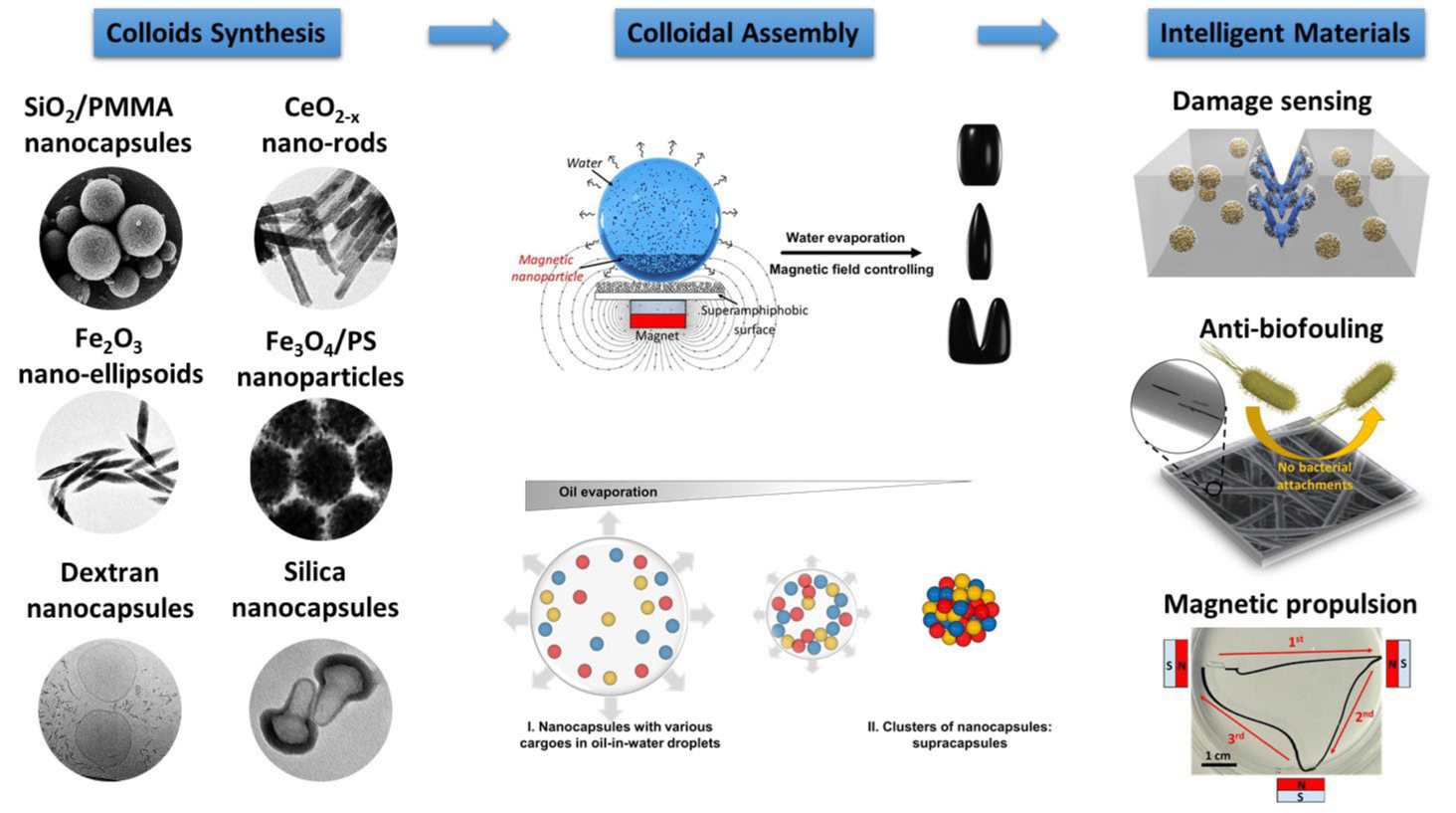
In this talk, I will present two pioneering colloidal assembly strategies, aimed at embedding intelligent behavior into microsystems for applications in biomedicine and environmental sustainability. First, we utilize evaporation-driven self-assembly to create colloidal assemblies with tunable geometries and multi-compartment architectures. This technique allows for controlled motion and targeted cargo release, enhancing the functionality of microrobots in complex environments [1,2]. Second, we explore capillarity-assisted particle assembly, a method that achieves modular integration of colloidal building blocks with high spatial precision. This approach facilitates the incorporation of distinct liquid compartments and functional components, enabling autonomous motion and localized sensing [3,4].
Together, these strategies demonstrate a versatile platform for constructing micromachines with diverse physical intelligences. By exploiting the unique properties of colloids and their assembly processes, we aim to develop intelligent microrobots capable of autonomously sensing environmental cues, directing their movement, and performing advanced tasks. This research not only pushes the boundaries of micro- and nanorobot capabilities but also opens new avenues for the use of robotic applications across various fields, thereby overcoming existing limitations and setting a new standard for intelligent colloidal systems.
Acknowledgements: M. Hu thanks the financial support from Swiss National Science Foundation (Ambizione Grant, No. 216253).
References
[1] M. Hu, H.-J. Butt, K. Landfester, M. Bannwarth, S. Wooh, and H. Thérien-Aubin, ACS Nano, 2019, 13, 3015-3022.
[2] M. Hu, N. Reichholf, Y. Xia, L. Alvarez, X. Cao, S. Ma, A. deMello, and L. Isa, Materials Horizons, 2022, 9, 1641-1648.
[3] M. Hu, X. Shen, D. Tran, Z. Ma, and L. Isa, Journal of Physics: Condensed Matter, 2023, 35, 435101.
[4] M. Hu, Z. Ma, M. Kim, D. Kim, S. Ye, S. Pané, S., Bao, Y., Style, R.W. and Isa, L., Advanced Materials, 2025, 37, 2410945.