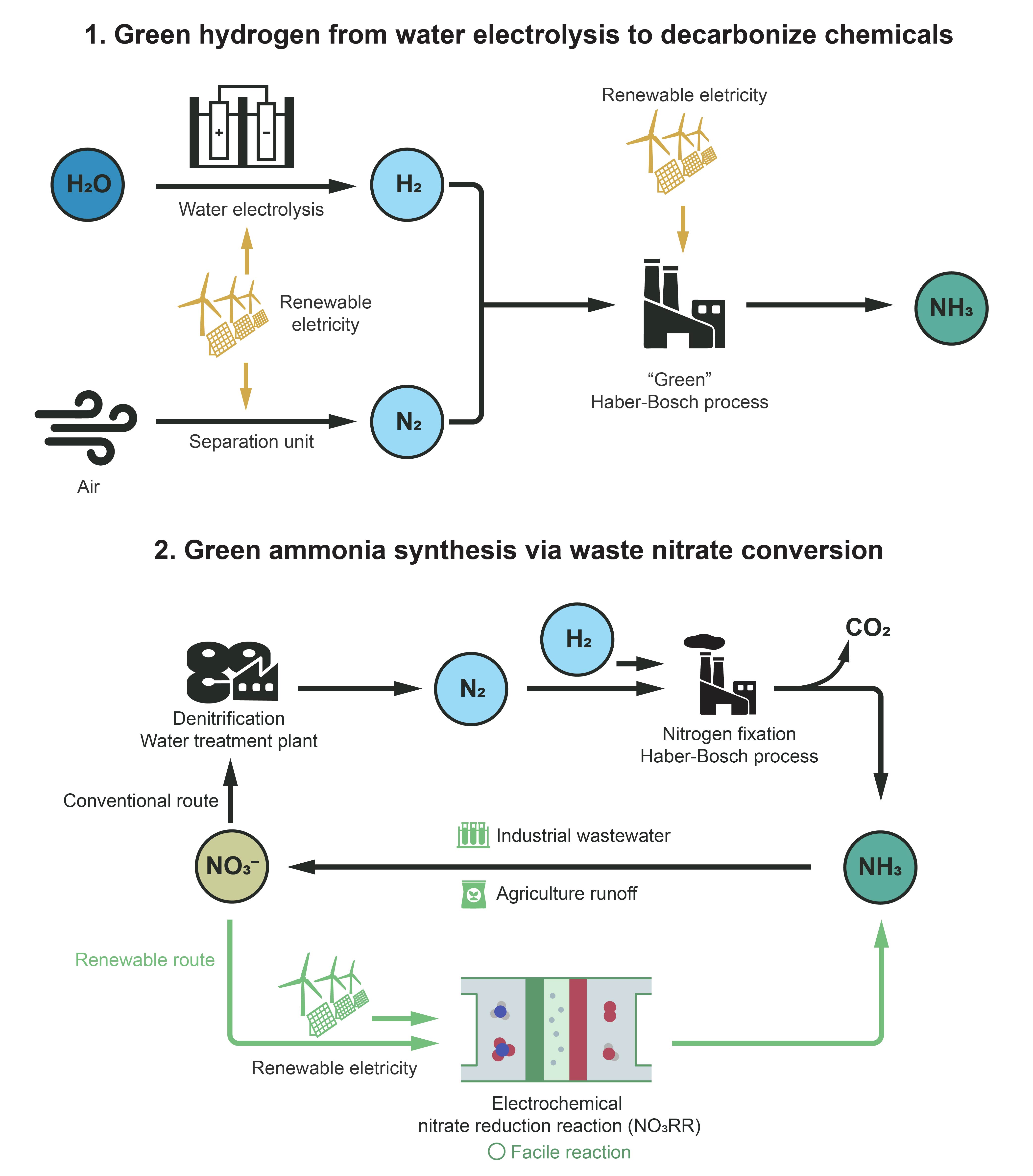
The rapid increase in atmospheric carbon dioxide levels has become a pressing concern for global climate change. Electrocatalysis has emerged as a critical pathway for decarbonizing chemicals and fuels, particularly in the production of hydrogen and ammonia, given the intensive carbon emissions associated with conventional chemical engineering plants. During my research career, I systematically address the current challenges within electrocatalytic water splitting and nitrate reduction reactions, which are critical processes for green hydrogen and ammonia synthesis. I first investigated mechanistic insights into the stability challenges of oxygen evolution reaction catalysts, alongside practical considerations for reactor design. A non-iridium-based electrocatalyst was then developed to reduce costs and enhance durability for the acidic oxygen evolution reaction, integrated into a proton exchange membrane electrolyzer to facilitate efficient green hydrogen production. Additionally, I investigated an oxide alloy catalyst system aimed at further reducing noble metal loading while enhancing catalyst activity. Furthermore, I examined electrochemical nitrate reduction as an alternative pathway for green ammonia production, focusing on the design and synthesis of catalysts for efficient conversion. Moreover, I designed a solid electrolyte reactor and coupled it with a cation shuttling process to advance the direct conversion of waste nitrate streams into green ammonia. The catalyst design and electrolyzer engineering strategies proposed in this dissertation contribute meaningfully to the development of electrochemical technologies crucial for sustainable energy and resource management.
In pursuit of a faculty role, my expertise in electrocatalysis, nanomaterial synthesis, and reactor engineering positions me uniquely. Proficient in green chemicals production, I focus on electrocatalysis solutions for 1. Nitrate reduction reaction in wastewater, aiding environmental remediation and resource recovery; 2. Water splitting for green hydrogen, emphasizing non-nobel material development for oxygen evolution reaction; 3. Energy storage and conversion via catalyst-polymer interfacial engineering. Past achievements, including publications in Nature Nanotechnology and Nature Catalysis and proposal writing experiences for DOE and NSF grants, demonstrate my ability to conduct rigorous and innovative research. Beyond technical proficiency, my commitment to fostering an inclusive research environment aligns with values crucial for collaboration and mentorship. I aim to contribute to renewable energy advancements and environmental sustainability, driven by impactful research, mentorship, and collaboration.