2025 AIChE Annual Meeting
(433h) DNA Storage, Encryption, and Encoded Library: From Molecular Data Storage to New Drug Discovery
Author
We have introduced cutting-edge nucleic acid research progress in DNA storage and encryption into DEL technology, integrating automated solutions such as digital microfluidics to develop a next-generation chip-based DNA-encoded library system - DEL-on-a-chip. We successfully constructed multiple novel molecular libraries featuring new scaffold structures and warheads, including natural product-derived steroid libraries and sulfonyl fluoride covalent libraries. Empowered by the DEL-on-a-chip technology, we identified several promising lead compounds with good activity against various drug targets such as PGAM1, HIF-1α, and PD-L1, demonstrating potential clinical translation value[3-4].
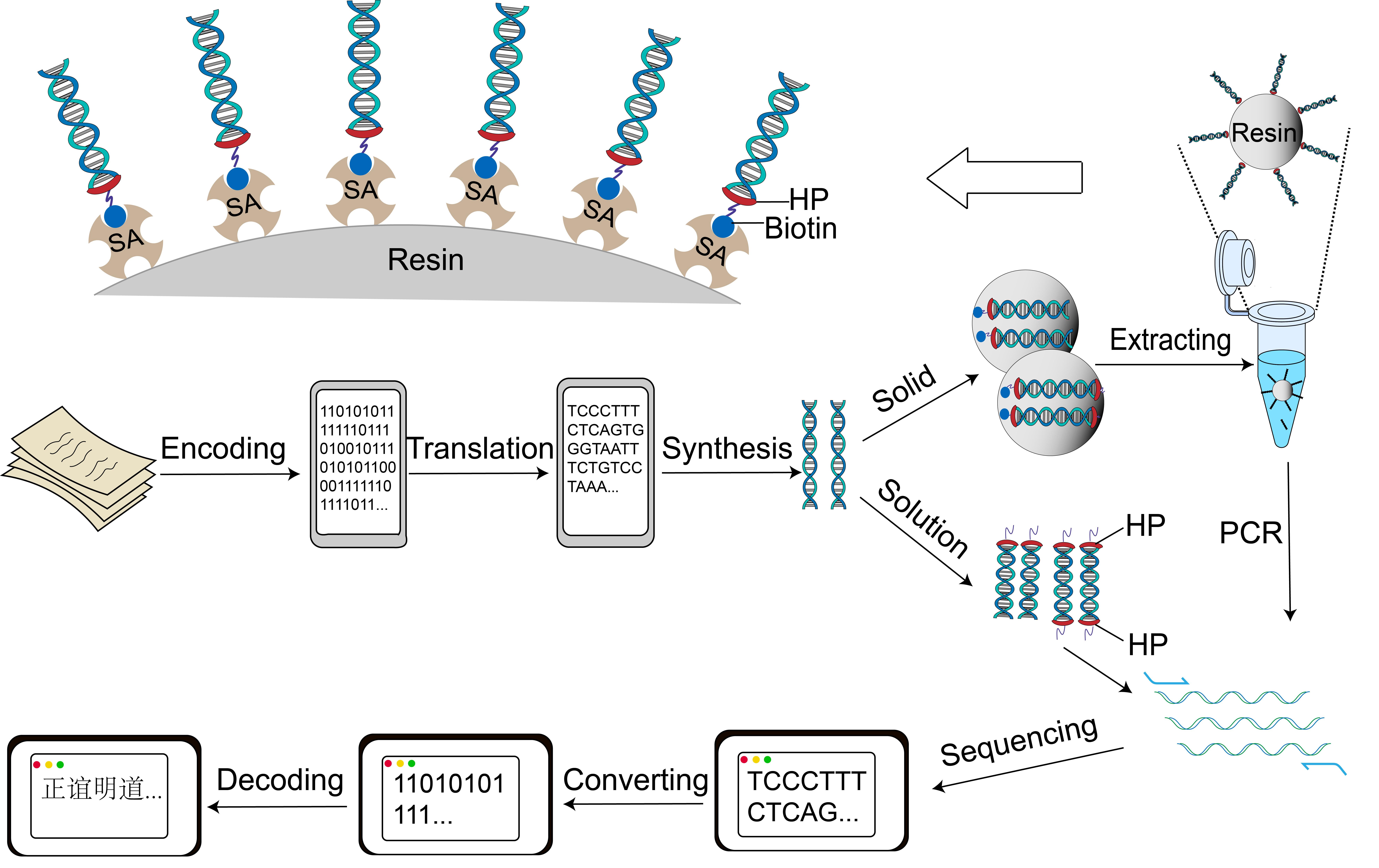
Concurrently, we discovered that frontier developments in DEL technology can reciprocally promote practical applications of DNA information storage. For instance, we adapted the long-established Headpiece technology from DEL systems to DNA data storage, significantly enhancing data storage stability, reliability, and anti-interference capabilities[5].
[1] Zhang, Y; Qu, Z.-b.; Pradeep Narayanan, R.; Williams, D.; et al., J. Am. Chem. Soc., 2021, 143: 8639.
[2] L Jiang, S Liu, X Jia, Q Gong, et al., J. Am. Chem. Soc., 2023, 145: 25283.
[3] Xue Z., Li H., Xie W., Xu Y et al., ACS Med. Chem. Lett. 2022, 13: 1864.
[4] Yang J., Lu Y., Hu K., Zhang X., Act. Pharmaceut. Sin. B. 2025, 15: 392.
[5] C Hu, Q Wen, Q Lai, Z Xie, et al., Chem. Commun. 2025, 61: 881.