2025 AIChE Annual Meeting
(402v) A Comparative Life Cycle Assessment of a Hybrid Solid Oxide Fuel Cell System Using Low Carbon Fuel Blends of Hydrogen and Natural Gas for Combined Heat and Power Generation
Authors
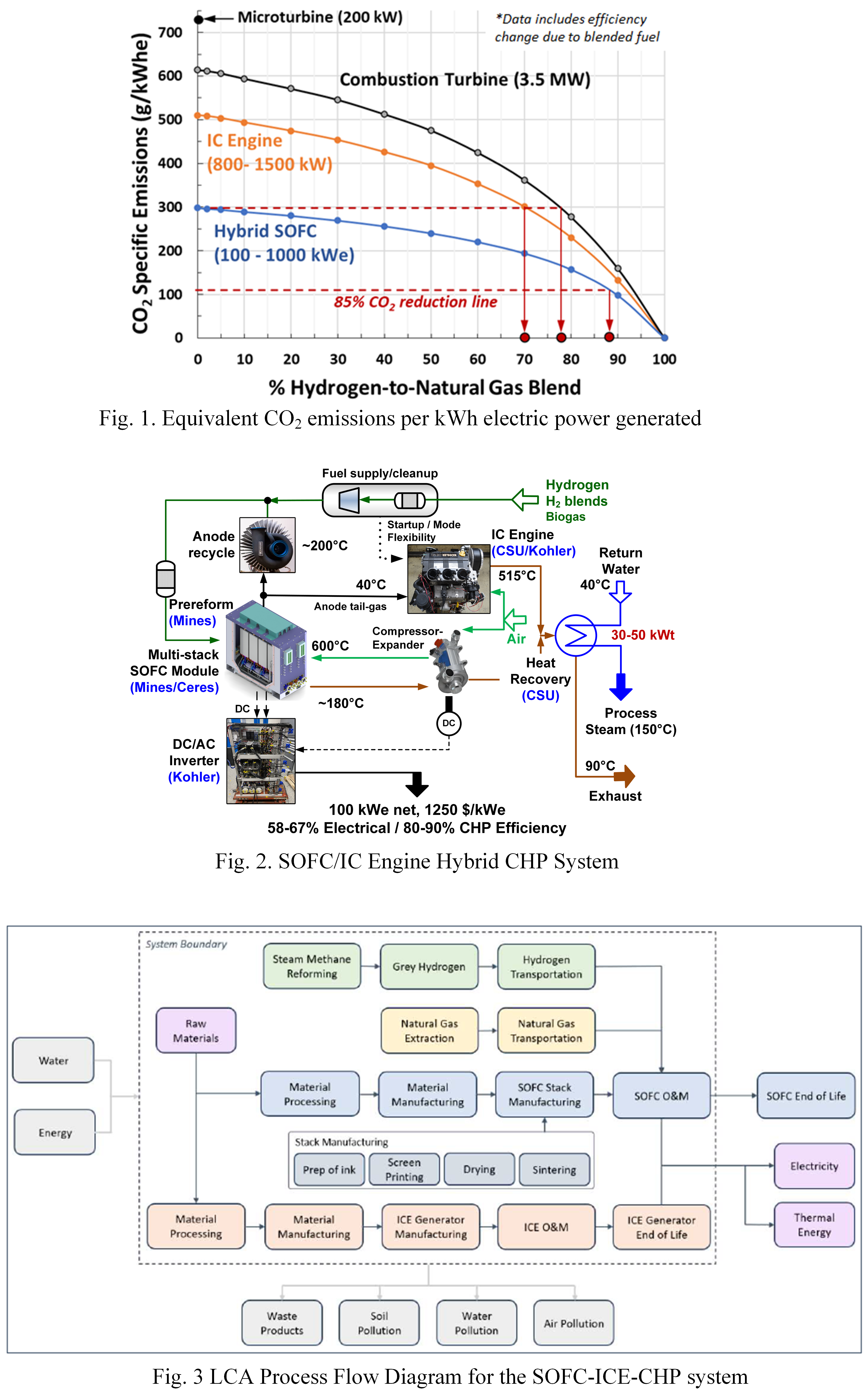
This paper compares the cradle-to-grave life cycle environmental impacts of a hybrid SOFC-CHP system utilizing three fuel blends, with that of a representative industrial gas turbine, and packaged internal combustion engine generator. Each technology produces thermal and electrical energy based off the energy demand requirement for different utilization cases. We determine the environmental impacts produced from these use cases using OpenLCA software, carbon intensity using GREET, and evaluate how changing building energy requirements affects which option produces the least impacts. The impacts of each system, from raw material extraction and material processing, to the manufacturing of the system, to the system utilization, and the end-of-life impacts, are included. These impacts are quantified with respect to a functional unit (FU) of 1 kWh of electricity produced which is commonly utilized for life cycle assessment (LCA) of distributed energy resources, allowing this data to be compared to LCAs conducted on other competing forms of co-generation. Utilization cases are built out to simulate an application (or buildings energy demand) which will in turn vary the production requirements of the three technologies, the performance of the technologies, and subsequently the environmental impacts associated with the production of 1 kWh of electricity for each technology. Fig. 2 illustrates the system under study for the LCA. Due to the high efficiency of hybrid SOFC-CHP systems, the impacts per FU to fulfill end-user thermal and electrical energy requirements are lower than the impacts of the two competing technologies. Because of the operational flexibility of the SOFC-CHP system, it can operate in maximum electric efficiency, maximum thermal output, or maximum power output modes. These modes all influence the thermal-to-electric ratio of the co-products. The impact method being utilized for this comparison is the TRACI impact method, and quantification of the impact categories include acidification, ecotoxicity, eutrophication, global warming potential, ozone depletion, and respiratory effects. Life cycle impact factor reductions of 25-75% are possible across this inventory when compared with conventional combustion power generation equipment. We also find that the reduction of localized impacts during utilization, including particulate matter, and human health impacts, supports distributive energy justice concerns through reducing human health risks in communities located near industrial sectors.