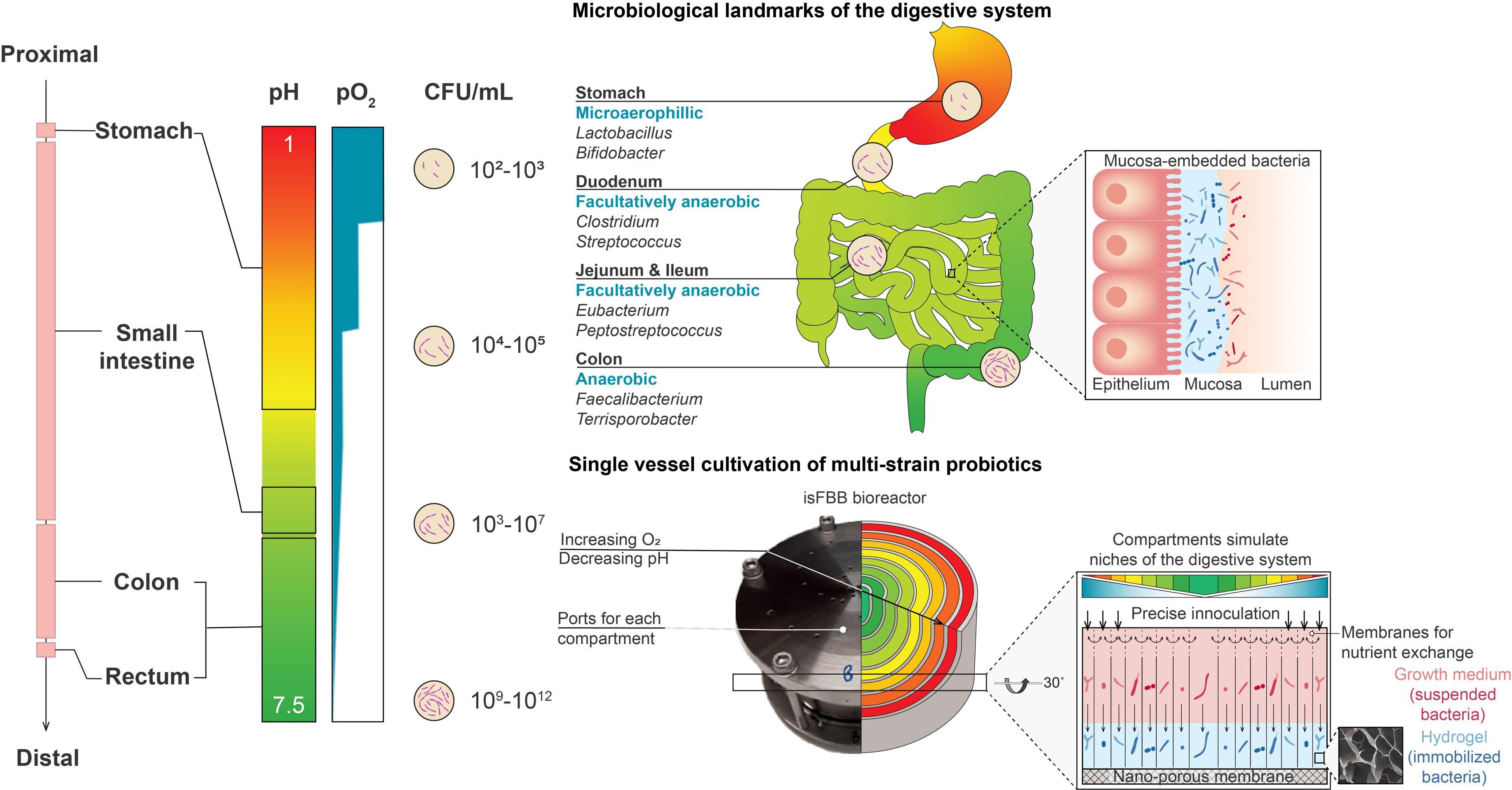
The human gut is home to a complex community of microbes that affect health by influencing digestion, immune function, and neurophysiology. Dysbiosis, an imbalance in this community, is linked to several intestinal disorders (including obesity and inflammatory bowel disease) which are on a trend of increasing prevalence. Probiotics have gained attention for their utility in maintaining gut health and treating intestinal disorders. However, limited cultivation of critical gut microbes has led to most probiotics being limited to single or oligo-strain formulations, with
Bifidobacterium and
Lactobacillus spp. dominating the probiotic market due to their historical use in the food industry. Consequently, the therapeutic potential of probiotics is limited by low metabolic and taxonomic diversity of commercial preparations. The development of probiotic treatments is also challenged by the required encapsulation within hydrogel materials to ensure viability and targeted delivery within the gut, which increases production costs and can be counterproductive for multi-strain probiotic formulations.
Here, a novel, yet frugal, radial in situ fibrous bed bioreactor (isFBB)-fermentation approach is introduced that merges probiotic encapsulation with simultaneous multi-species fermentation to produce high-viability multi-strain probiotics for a panel of 10 anaerobic gut commensal species. In this work, the underlying assumptions were tested with optical and electron microscopy and results demonstrate how isFBB technology mimics the gut microenvironment, facilitating the development of novel multi-strain probiotics formulation through a scalable, sustainable, and cost-effective system. This technology shows potential to enhance the production of personalized probiotics, especially for low-and middle-income countries, and in advancing gut microbiome research.