2025 AIChE Annual Meeting
(385ak) Bioconversion of Methane into Long-Carbon Chain Chemicals By Artificial Methanotrophic Bacteria
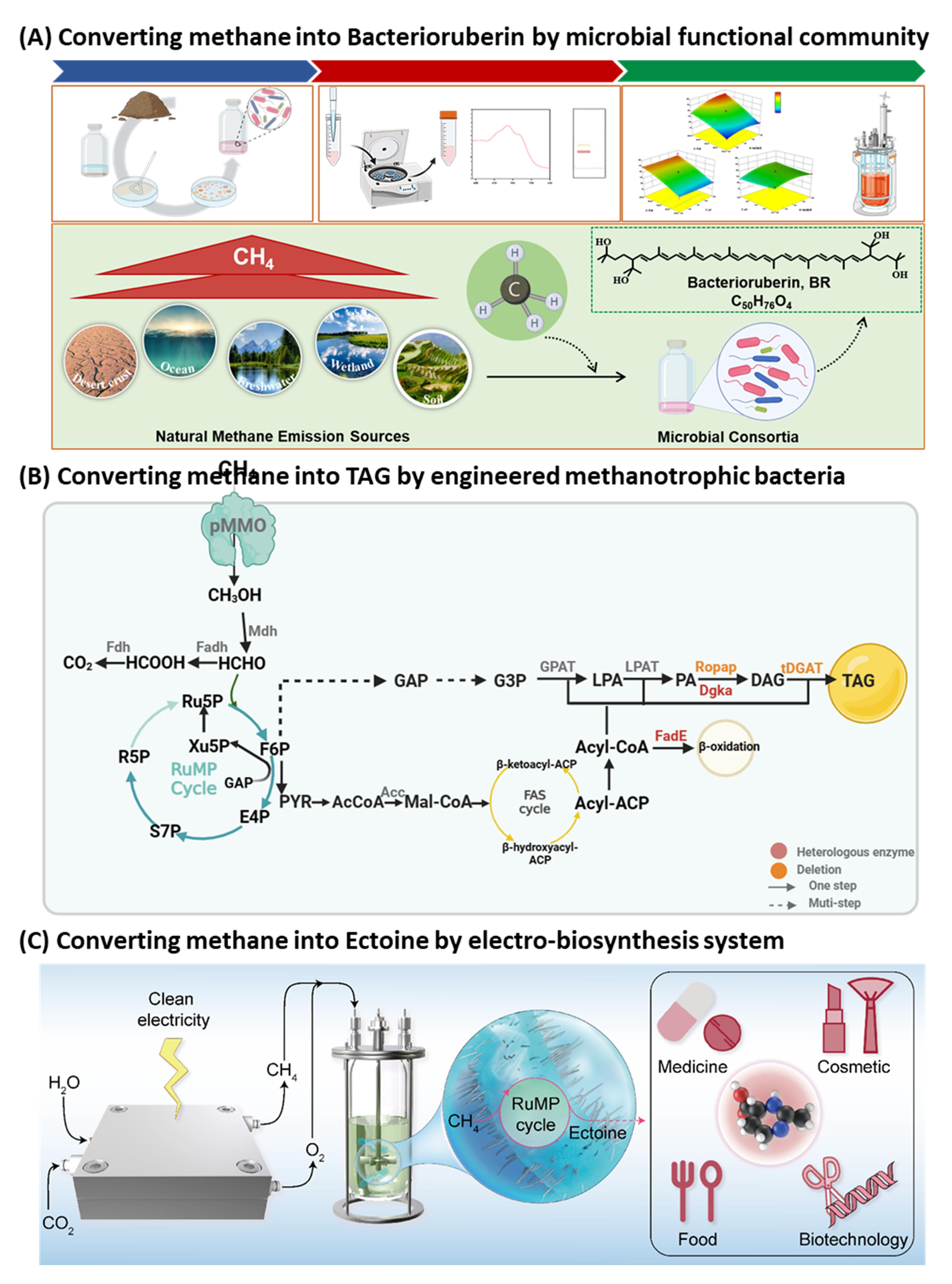
Greenhouse gases are recognized as cost-effective and renewable feedstocks for biomanufacturing. The conversion of these gases into valuable products has emerged as a pivotal strategy for advancing green and low-carbon development, thereby establishing a novel paradigm in material synthesis. Nonetheless, the efficient conversion of C1 gases into C3+ molecules remains a formidable challenge. Methane-based biomanufacturing technology, utilizing non-model methanotrophic bacteria as chassis cells, can effectively fix methane and channel it towards the production of long-chain products, which holds significant promise for promoting green and low-carbon development. By integrating advanced synthetic biology techniques, this study investigated the feasibility of three pathways for converting methane into long-chain chemicals including microbial functional community enrichment, metabolic engineering of methanotrophic bacteria, and the development of a chemical-biological hybrid system. Employing a functional microbial community enriched from soil with methanotrophs as the dominant species, this study successfully achieved the conversion of methane into Bacterioruberin. By introducing exogenous functional genes, this study innovatively accomplished the conversion of methane into triglycerides. A novel electrochemical-biological catalytic coupling system was developed by integrating electrochemical reactions with microbial processes, facilitating the upgrading of methane produced from the reduction of carbon dioxide to ectoine, and proposing a new route for the biological manufacturing of ectoine using greenhouse gases. Furthermore, methanotroph chassis cells with high-temperature tolerance were obtained through physical mutagenesis and laboratory adaptive evolution, thereby expanding the application scope of methane biomanufacturing technology. This study broadens the product spectrum of methane-based biomanufacturing, providing new insights for the high-value utilization of methane and the low-carbon biosynthesis of innovative substances.