2025 AIChE Annual Meeting
(180au) Assessment of Radionuclides in Qatar’s Seawater: Distribution, Sources, and Implications
Authors
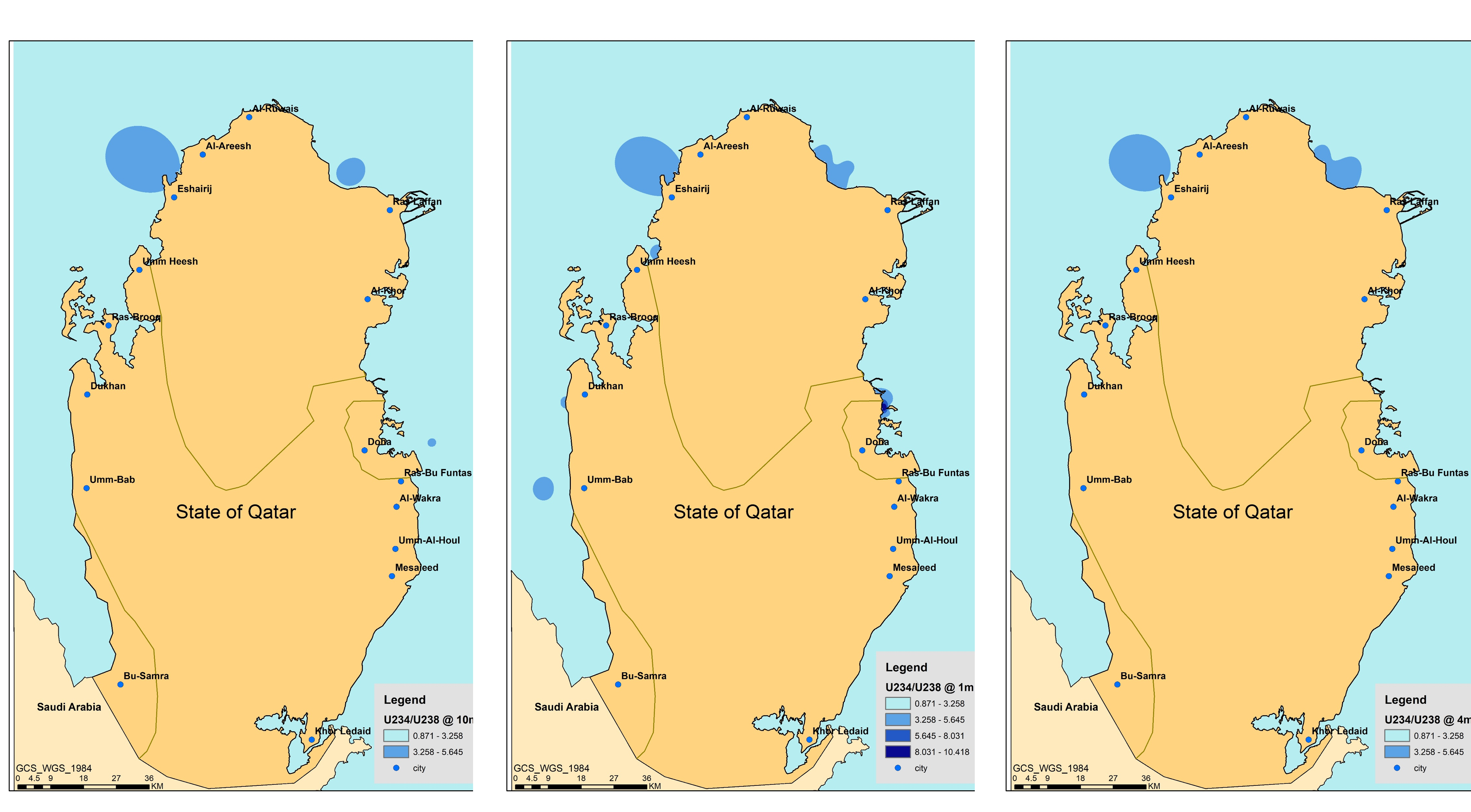
Analysis of Qatar’s seawater samples reveals U-238 concentrations ranging from 0.0144 to 0.1048 Bq/L, with a mean of 0.0415 Bq/L, slightly lower than levels reported in Kuwait’s Arabian Gulf waters (0.047–0.050 Bq/L). U-235 concentrations in Qatar range from 0.001 to 0.005 Bq/L, averaging 0.0026 Bq/L, which is marginally higher than in Kuwait (0.00186–0.00198 Bq/L). Additionally, a significantly high U-234/U-238 ratio (average 1.817, compared to the global natural ratio of 1.144) supports the likelihood of external contamination from sources such as nuclear power plants or atmospheric deposition. These variations suggest uranium sources from natural leaching or anthropogenic activities. Other radionuclides, including tritium and potassium-40, align with regional levels, while cesium-137 is found at significantly lower concentrations. However, discrepancies in lead-210 and polonium-210 levels indicate the need for continuous monitoring to assess potential sources and environmental impact. Ongoing surveillance of radioactive substances in seawater is crucial to safeguarding marine ecosystems and ensuring public health in Qatar and the broader Gulf region. These findings highlight the need for ongoing research and monitoring to assess potential environmental and health risks. This study provides a foundation for further investigations into contamination sources and long-term implications for Qatar’s marine ecosystem and water resources, ultimately informing strategies for effective seawater treatment and radionuclide mitigation.