2025 AIChE Annual Meeting
(229g) Amine-Impregnated Dendritic Hierarchically Structured Silica for Selective CO2 Capture
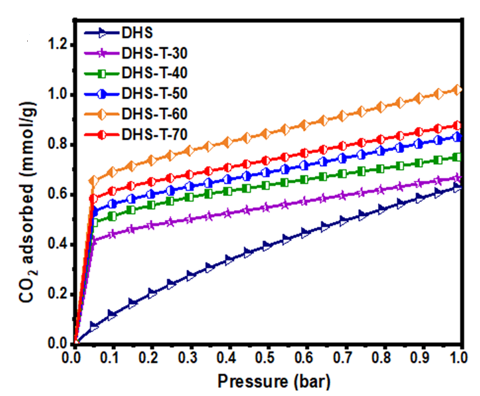
Owing to the excessive reliance on fossil fuels to date (1), the annual CO2 emission growth rate increased from 0.9% in the 1990s to 3% in the 2000s, and atmospheric CO2 concentration has surpassed the unprecedented level of 410 ppm. Without effective action, it is projected to reach 530–980 ppm, causing a rise in global average temperature from 1.4 °C in 1990 to 6 °C in 2100 (2). This underscores the urgent need for effective mitigation of CO2 emissions by developing efficient CO2 capture technologies to close the anthropogenic carbon loop and achieve the 2050 carbon neutrality targets. Amine-modified silica adsorbents are promising for CO2 capture due to the high CO2 affinity of amines and the porous structure of silica supports. However, their development faces challenges such as limited amine loading and reliance on costly, unsustainable silica precursors. This study addresses these issues by synthesizing TEPA-modified dendritic silica using rice husk waste as an eco-friendly, low-cost silica source. The optimized adsorbent achieved a more than 9-fold increase in CO2 uptake and more than 35-fold improvement in CO2/N2 selectivity at 298 K and 50 mbar. It maintained high CO2 selectivity up to 333 K, exhibited reduced water sorption at high humidity, and retained over 95% of its CO2 uptake after five cycles. The study also explores temperature-dependent CO2 uptake, adsorption heat, and kinetics, highlighting the prepared material as a cost-effective, sustainable alternative for efficient CO2 capture.