Breadcrumb
- Home
- Publications
- Proceedings
- 2023 AIChE Annual Meeting
- Engineering Sciences and Fundamentals
- Electrochemical Fundamentals: Faculty Candidate Session I
- (326d) Electrochemical Bicarbonate Conversion into Chemicals and Fuels

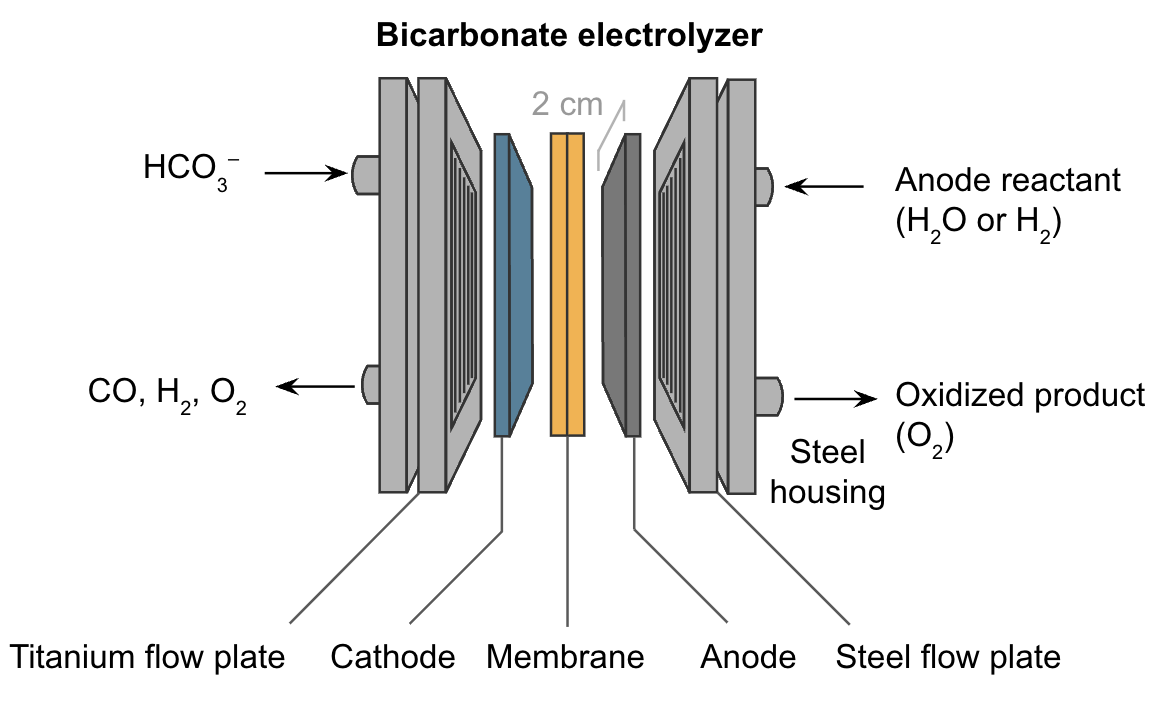
This presentation will discuss the science and engineering behind âbicarbonate electrolyzersââdevices that convert bicarbonate-based carbon capture solutions into reduced carbon products in a single-step. Bicarbonate electrolyzers use H+ generated electrochemically to trigger the in situ release of CO2 gas from bicarbonate near a CO2 reduction catalyst. This acid-base mechanism enables high product formation rates without the need to isolate pure CO2 gas upstream. Since the first report of bicarbonate electrolysis,2 we systematically investigated the effect of electrode properties (e.g., hydrophobicity and surface area),3 operating conditions (e.g., pressure and temperature),4 CO2 capture promoters,5 and ionic surfactants6 on product formation rates. The use of hydrophilic silver electrodes and elevated pressures enabled CO formation rates >200 mA cm-2, and the addition of cetrimonium bromide to the bicarbonate feedstock enabled >100 mA cm-2 of methane formation when using a porous copper electrode. 1D multi-physics models were used to quantify the rate-limiting in situ CO2 formation step and show how a high H+ flux from the membrane increases methane selectivity with copper catalysts. Finally, the electrolyzer was integrated with a CO2 absorption column and tested with different CO2 capture promoters. This talk will overview these studies and establish guidelines for converting reactive carbon capture solutions into valuable products.
References